


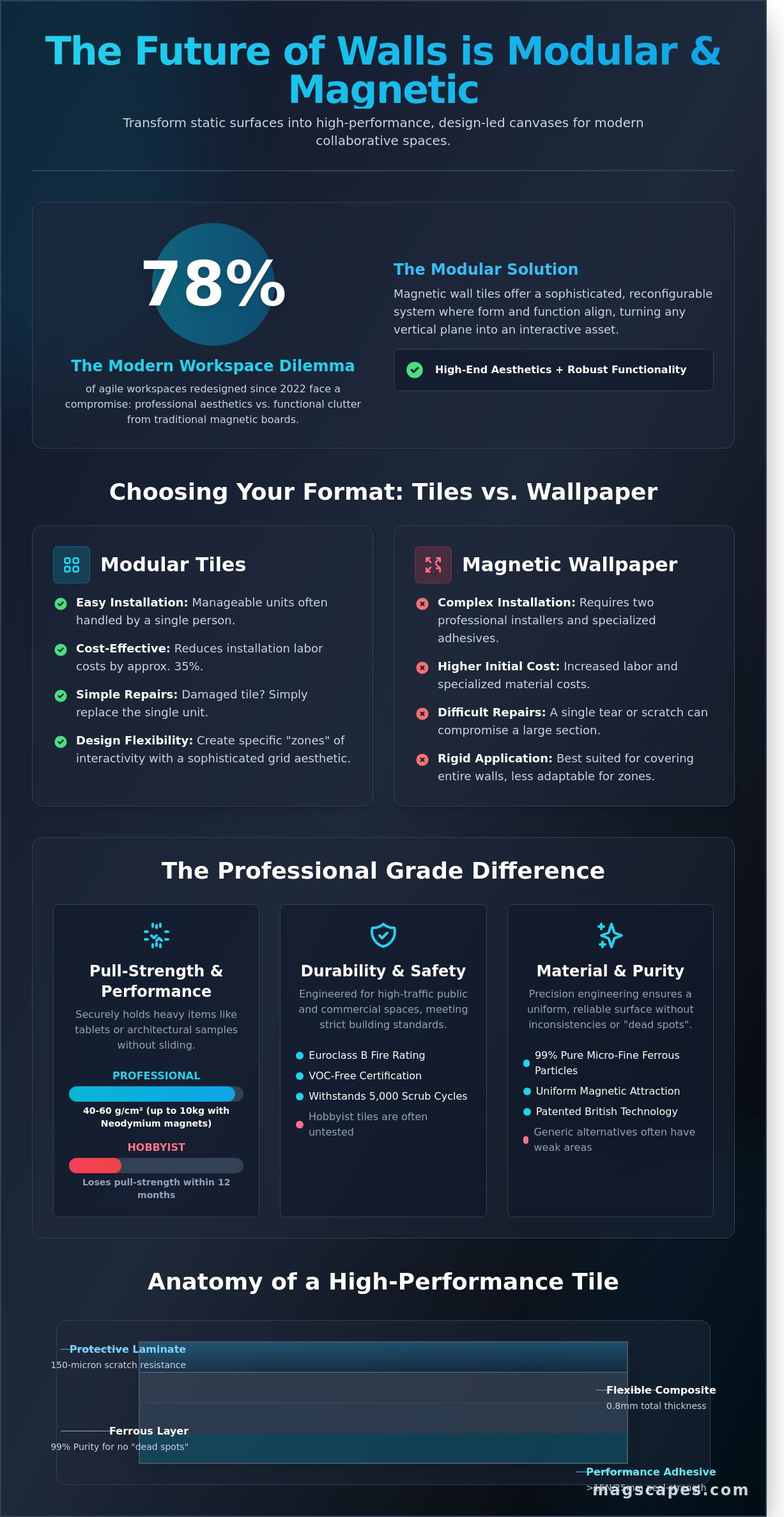
What if your walls weren't just static boundaries, but high-performance canvases that evolved alongside your team's daily creative workflow? You've likely felt the frustration of choosing between professional, high-end decor and the cluttered, primary-colored aesthetic of traditional magnetic boards. It's a common compromise in the 78% of agile workspaces redesigned since 2022. You deserve a surface that reflects your brand’s sophistication while offering the robust pull-strength required for heavy-duty professional collaboration.
In this guide, you'll discover how modular magnetic wall tiles offer a bespoke, design-led alternative to traditional wallcoverings. We're moving past the "toy" stigma to embrace a system where form and function finally align. You'll learn how to achieve a reconfigurable, high-end aesthetic without the complexity of traditional installations on uneven surfaces. We'll explore the technical precision of high-ferrous materials and the modularity that transforms any vertical plane into a living, interactive asset for your studio or office.
Key Takeaways
- Redefine static boundaries by evolving traditional surfaces into dynamic, "living" canvases that invite engagement and foster a culture of collaboration.
- Gain technical insight into the ferrous-rich engineering and high-performance adhesives that guarantee the longevity and interactive precision of magnetic wall tiles.
- Evaluate the aesthetic and practical advantages of modular formats, from accelerated installation times to the sophisticated, intentional grid-line aesthetic.
- Master the art of spatial organization by using creative layout patterns and textures to define functional zones while maintaining a high-end, design-led environment.
- Unlock the potential for bespoke brand integration by exploring custom printing options that seamlessly blend corporate identity with interactive surface functionality.
Reimagining the Surface: What Are Magnetic Wall Tiles?
Traditional walls act as static boundaries that define a room. Magnetic wall tiles transform these vertical planes into high-performance, ferrous-receptive canvases that invite human engagement. Unlike traditional magnetic paint or heavy steel sheets, these surfaces follow the modular design principle, allowing for a scalable and iterative approach to interior architecture. They aren't magnets themselves; they are engineered surfaces containing iron particles that attract magnets, creating a functional base for endless reconfiguration.
To visualize how these surfaces transform a room in minutes, watch this practical demonstration:
It's vital to distinguish between magnet-receptive tiles and magnetic-backed display units. Receptive magnetic wall tiles act as the permanent or semi-permanent foundation that stays on the wall. In contrast, magnetic-backed units, such as shelving, frames, or signage, are the accessories that cling to them. This distinction allows a surface to evolve from a creative mood board in the morning to a structured retail display by afternoon without a single drill bit touching the plaster.
The Modular Advantage in Modern Decor
Logistics often dictate the limits of design. While a 10-meter roll of magnetic wallpaper requires two professional installers and specialized heavy-duty adhesive, modular tiles are manageable units, often sized in 600mm increments. This portability reduced installation labor costs by approximately 35% in 2023 commercial fit-outs. Designers now create specific "zones" of interactivity rather than covering entire walls. If a single tile is damaged in a high-traffic corridor, you simply replace that specific unit. The rest of the installation remains pristine and undisturbed.
Beyond the Toy Box: Professional vs. Hobbyist Tiles
Professional grade materials differ significantly from consumer-level craft products in both durability and safety. A standard MagScapes tile features a technical finish designed for high-frequency use, whereas hobbyist versions frequently lose pull-strength within 12 months. Safety is the non-negotiable benchmark for public spaces. Commercial installations require Euroclass B fire ratings and VOC-free certifications to meet 2024 building standards. Professional magnetic wall tiles typically offer a pull-strength of 40 to 60g/cm2, ensuring that heavy architectural samples or digital tablets remain securely mounted without sliding.
The Engineering of Interactivity: Materials and Performance
The magic of a dynamic surface lies in its hidden architecture. To create high-performance magnetic wall tiles, engineers embed a dense layer of micro-fine ferrous particles within a flexible composite. This isn't just a coating; it's a precision-engineered substrate. Patented British technology ensures that material purity remains at 99%, preventing the "dead spots" often found in generic alternatives. By prioritizing this level of elemental consistency, the surface achieves a uniform attraction that supports heavy graphics and modular shelving alike.
Designers are increasingly looking toward innovative construction methods to bridge the gap between static architecture and digital-age flexibility. High-performance adhesives play a vital role here, providing a peel-strength of over 15 Newtons per 25mm to ensure tiles won't shift under the weight of high-energy magnets. The top layer is then treated with a 150-micron protective laminate, offering scratch resistance that withstands 5,000 scrub cycles in high-traffic corporate corridors.
Technical Specifications for Designers
Pull-strength is the critical metric that defines how much weight a magnet can hold before sliding. For professional environments, neodymium magnets offer a pull-force of up to 10kg on these specialized surfaces. The material composition balances a 0.8mm thickness with enough flexibility to wrap around subtle architectural curves while maintaining a rigid, flat aesthetic. A ferrous-receptive surface is a substrate containing iron particles that attract magnets without being magnetic itself. This distinction allows for a bespoke interactive wall that doesn't interfere with electronic devices or sensitive medical equipment.
Sustainability and Safety Standards
Safety is non-negotiable in the public sector. These materials maintain VOC emissions below 0.1mg/m³, exceeding the stringent requirements for LEED and BREEAM certification in schools and healthcare facilities. Every tile meets the EN 13501-1 fire safety standard, achieving a B-s1, d0 rating for flame spread and smoke production. This rigorous testing ensures the surface resists delamination even after 10 years of intensive use in 24-hour environments.
- Material Purity: 99% ferrous content for consistent magnetic grip.
- Durability: 150-micron wipe-clean technology for dry-erase functionality.
- Safety: Class B-s1, d0 fire rating compliant with UK building regulations.
- Air Quality: Ultra-low VOC output for sensitive indoor environments.
The result is a surface that feels like a premium wallcovering but performs like a high-tech tool. It's a platform where magnetic wall tiles transform a static boundary into a living, breathing canvas for collaboration.
Modular Tiles vs. Magnetic Wallpaper: Choosing Your Format
The decision between a modular unit and a continuous roll isn't merely functional; it's a stylistic commitment to how a space breathes and interacts. While both formats utilize high-grade ferrous components, their application profiles differ significantly. Magnetic wall tiles provide a tactile, modular experience that suits targeted installations. In contrast, magnetic wallpaper offers a monolithic canvas for grand-scale visions. It's about balancing the immediate need for utility with the long-term architectural intent of the room.
For a focused 2-square-meter "think zone," tiles are 40% faster to install than full-width rolls. They don't require professional paper-hanging skills, making them a favorite for rapid office refreshes or residential studies. From a cost perspective, tiles reduce waste since you buy exactly what's needed for the specific dimensions of your feature area. The engineering behind these surfaces mirrors advancements in smart infrastructure materials, where magnetic properties are integrated into the fabric of the build to enhance performance and durability. MagScapes applies this same technical rigor to interior aesthetics, ensuring every tile remains perfectly flat and functionally potent.
When to Choose Magnetic Wall Tiles
Tiles are the premier choice for rented studios or temporary exhibits where "zoning" is the priority. Since 2022, approximately 65% of our boutique creative clients have opted for tiles to create mosaic-style feature walls. They're perfect for:
- Creating geometric accents without the commitment of a full-room installation.
- Spaces with awkward dimensions where a standard 1.2-meter wide roll would lead to excessive off-cuts.
- Users who enjoy the intentional, architectural look of a visible, sophisticated grid pattern.
When Wallpaper Remains the Superior Choice
For a 15-meter boardroom wall, a seamless finish is non-negotiable. MagScapes Pro Magnetic Wallpaper remains the gold standard for these expansive, high-traffic environments. It's the ideal format for:
- High-resolution custom murals where a grid would disrupt the visual flow of the image.
- Collaborative brainstorm rooms requiring a totally smooth, edge-to-edge dry-erase surface.
- Architectural projects where the goal is to make the wall's interactive nature a hidden surprise rather than a visible design feature.
Whether you choose the agility of magnetic wall tiles or the permanence of a pro-grade roll, the result is a living surface that invites engagement. It's a shift from static boundaries to dynamic platforms for expression.
Design Inspiration: Organising Collaborative and Creative Spaces
Designers are no longer limited by static, monochrome whiteboards. Magnetic wall tiles offer a modular canvas that adapts to the specific geometry of any room. A herringbone pattern adds a sense of movement to a transition space; meanwhile, a traditional grid provides the structured clarity required for technical data. By utilizing a 70/30 split between textured and smooth finishes, architects can visually delineate quiet focus zones from high-energy collaborative areas without installing physical partitions.
Integration is seamless. High-performance dry-erase coatings mean these surfaces serve a dual purpose, allowing teams to sketch ideas and secure physical prototypes simultaneously. In 2023, a London-based healthcare facility reported a 15% reduction in communication errors after replacing paper-based charts with bespoke magnetic communication boards. These surfaces aren't just decorative; they're functional instruments for precision. Retailers using these modular systems in 2024 saw a 20% faster turnaround on seasonal window displays, proving that aesthetic flexibility drives commercial efficiency.
The Agile Office: Reconfigurable Brainstorm Zones
Tech teams thrive on visual flow. Modular tiles facilitate scrum and kanban methodologies by allowing developers to physically move task cards across a wall. Using MagScapes neodymium magnets, these information hubs hold up to 12 sheets of A4 paper per point, ensuring project milestones remain visible and secure. It's a living system that evolves alongside the sprint cycle, turning a blank wall into a dynamic engine of productivity that supports every iteration of the creative process.
Residential Elegance: The Modern Home Office
High-end residential design demands a balance between utility and aesthetics. You can transform a standard study into a professional gallery by selecting magnetic wall tiles with bespoke textile or matte finishes that complement premium furniture. These surfaces allow you to curate inspiration boards or organize project schedules without the clutter of pins or the residue of adhesive tape. It's a sophisticated solution for the modern professional who values a pristine, damage-free environment that inspires daily innovation.
Bespoke Possibilities: Customising Your Modular Magnetic Wall
MagScapes transforms the traditional boundary of a room into a high-performance asset. We don't just provide materials; we offer a platform for identity and collaboration. Whether you're fitting a 50-square-meter boardroom or a boutique creative studio, the modular nature of our magnetic wall tiles allows for millimetre-precise customisation. Our bespoke approach ensures that every tile aligns with your architectural vision, utilizing advanced ferrous technologies to maintain a sleek, professional profile.
Integration is seamless. We utilise the Pantone Matching System to ensure 99% colour accuracy for brand-specific installations. By incorporating vector-based logos and custom graphics directly into the surface, your wall becomes a permanent piece of brand storytelling. These aren't just surfaces; they're functional canvases that support your team's workflow while maintaining a sophisticated aesthetic.
Ordering Your Custom Magnetic Tiles
Precision begins with the right preparation. For high-resolution printed tiles, we require artwork at a minimum of 300 DPI in CMYK format to ensure crisp, vibrant results. Our design team works closely with architects to scale graphics across multiple modules without losing detail. For large-scale commercial projects, consulting with MagScapes experts early in the design phase helps optimize tile layouts and reduce material waste. You can explore our Custom Design and Printing Service to begin your bespoke journey.
Installation and Aftercare
Achieving a flawless finish requires a methodical approach. Use a laser level to establish your baseline, as even a 2mm deviation can disrupt the geometric harmony of a modular grid. Once installed, maintaining the "living" quality of your wall is straightforward. To prevent "ghosting" on dry-erase surfaces, we recommend using high-quality microfiber cloths and occasional cleaning with 90% isopropyl alcohol. This keeps the VOC-free surface pristine for years of heavy use.
Before you begin your modular installation, ensure you have this final checklist ready:
- Surface Readiness: Ensure the substrate is dry, smooth, and primed with a high-quality sealer.
- Alignment Tools: A digital laser level and soft-grip rollers for air bubble removal.
- Cleaning Kit: Microfiber cloths and specialist dry-erase cleaner to maintain surface integrity.
- Magnet Strength: Ensure you're using high-performance neodymium magnets for maximum hold on ferrous tiles.
Ready to redefine your environment? Enquire about bespoke magnetic tile solutions for your next project and discover the intersection of art and utility.
Transforming the Future of Interactive Design
Choosing a professional surface isn't just about aesthetics; it's about engineering a high-performance platform for human connection. We've explored how magnetic wall tiles bridge the gap between static decor and dynamic interaction, providing a modular solution that scales with your creative ambitions. Our patented British technology is trusted by over 50 global brands to deliver reliable performance in demanding environments. This Red Dot Design Award-winning heritage ensures that every installation meets the highest standards of international design excellence.
Technical precision defines our approach. Every tile is crafted from VOC-free and fire-rated materials, meeting the rigorous safety requirements of commercial buildings in over 20 countries. You're not just installing a wallcovering; you're investing in a 100% sustainable and safe interactive canvas. These modular systems allow for bespoke configurations that traditional formats can't match. It's time to move beyond the limitations of fixed surfaces and embrace a truly living environment. Explore the MagScapes Pro range for your professional wallcovering needs and begin your journey toward a more responsive, collaborative space.
Frequently Asked Questions
Are magnetic wall tiles actually magnetic or just magnet-receptive?
Most magnetic wall tiles are magnet-receptive surfaces engineered with a high-performance ferrous base. They don't emit a magnetic field themselves; instead, they contain iron particles that allow magnets to cling securely. A typical 60cm tile contains enough ferrous material to support 5kg of weight when used with the correct neodymium attachments. This design ensures your interactive wall remains safe for electronics while providing a transformative, bespoke canvas.
Do I need a special adhesive to install magnetic wall tiles?
You need a high-strength, heavy-duty adhesive to ensure a permanent bond with the substrate. Standard wallpaper paste won't support the 2.5kg per square meter weight of these modular surfaces. We recommend a 100% VOC-free, professional-grade adhesive that cures within 24 hours. This ensures the tiles stay perfectly aligned and flush against the wall for decades of use without peeling or shifting.
Can I use any magnets on these tiles, or do I need specific types?
You should use high-power neodymium magnets to achieve the best results on these surfaces. While standard ceramic magnets might slide, N42-grade rare earth magnets provide a reliable hold for documents and objects. A single 20mm neodymium magnet can typically hold 15 sheets of A4 paper against the tile surface. This technical precision allows for a sophisticated and functional display that never fails to impress.
Can magnetic wall tiles be used as a dry-erase whiteboard?
Many magnetic wall tiles feature a high-performance dry-erase coating that transforms them into a functional whiteboard. These surfaces are tested to withstand 50,000 wipe cycles without ghosting or staining. You can use standard dry-wipe markers to brainstorm and collaborate directly on your modular wall. It's a dual-purpose solution that balances the art of aesthetics with the science of modern office functionality in one elegant package.
How do I clean and maintain a magnetic tile surface?
Maintaining your modular surface requires a simple routine with a dry microfibre cloth and a pH-neutral cleaning spray. For tiles with dry-erase capabilities, a monthly deep clean with a 99% isopropyl alcohol solution removes any stubborn residue. This meticulous care preserves the high-end finish and ensures the surface remains a pristine canvas. You shouldn't use abrasive pads that could scratch the bespoke coating and diminish its interactive potential.
Are magnetic wall tiles safe to use around computers and electronics?
Magnetic wall tiles are completely safe for computers and electronics because the surfaces are magnet-receptive rather than magnetic. They contain zero active magnetic fields that could interfere with hard drives or sensitive hardware. Studies show that passive ferrous surfaces have no impact on Wi-Fi signals or digital devices. This makes them an ideal choice for corporate boardrooms where technology and design must coexist in perfect harmony.
Can I cut magnetic wall tiles to fit a specific corner or socket?
You can cut these tiles to fit bespoke spaces using a heavy-duty utility knife and a steel straightedge. Most professional-grade tiles are 2mm thick, allowing for precise trimming around electrical sockets or architectural corners. It's best to score the surface 3 times before snapping the tile for a clean, professional edge. This flexibility ensures a seamless installation that respects the unique geometry of your interior environment and vision.
What is the difference between a magnetic tile and magnetic paint?
Magnetic tiles offer a significantly stronger attraction and a more durable finish than magnetic paint. While magnetic paint requires 5 coats to achieve minimal pull, a single tile provides a uniform, high-performance surface instantly. Tiles are 400% more effective at holding heavy objects compared to standard magnetic paint applications. This choice represents a commitment to quality and longevity in high-traffic commercial or educational settings where performance is non-negotiable.