


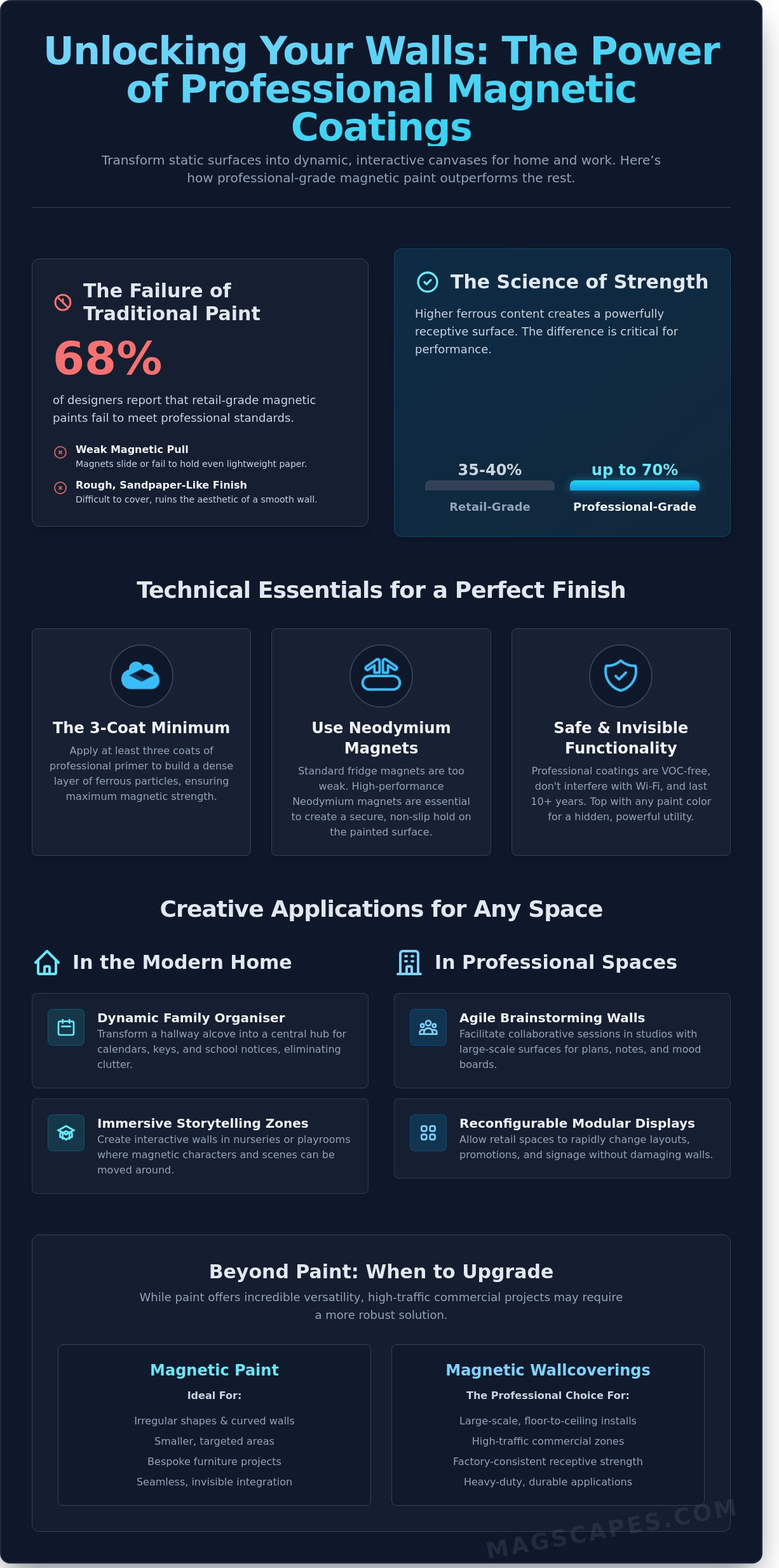
What if your walls could evolve from static boundaries into living, breathing tools for collaboration? You likely agree that a workspace should be more than four painted surfaces, yet 68% of designers report that traditional retail-grade magnetic paints fail to meet professional standards, often resulting in a weak pull and a disappointing, sandpaper-like finish. It's frustrating when a sophisticated design vision is hampered by subpar materials that simply don't perform.
In this guide, we'll demonstrate how professional-grade, high-ferrous coatings provide the foundation for 15 creative uses for magnetic paint that will redefine your interior by 2026. You'll learn how to achieve a bespoke, gallery-standard finish that supports everything from heavy architectural blueprints to interactive retail displays. We'll examine the technical precision required for a VOC-free, high-performance surface and show you how to turn any room into a sophisticated platform for expression.
Key Takeaways
- Learn how a high-performance ferrous primer can transform static walls into bespoke interactive canvases for any professional or residential environment.
- Discover a variety of creative uses for magnetic paint, from streamlining family organisers in hallway alcoves to creating immersive storytelling zones in nurseries.
- Master the technical "three-coat minimum" rule and understand why Neodymium magnets are essential for maintaining a secure hold on painted surfaces.
- Explore how agile studios and retail spaces utilise magnetic surfaces to facilitate collaborative brainstorming and rapidly reconfigurable modular displays.
- Identify the ideal moment to transition from a painted finish to professional-grade magnetic wallcoverings for high-traffic commercial projects and custom branding.
Reimagining the "Living Wall": What is Professional Magnetic Paint?
Walls traditionally served as static boundaries, defining the limits of a room while remaining purely decorative. Professional magnetic paint transforms these dormant surfaces into dynamic, interactive canvases. It's a specialised, high-performance primer infused with a dense concentration of ferrous particles. Once applied to a smooth substrate, it creates a magnet-receptive area that behaves like a sheet of steel but retains the flexibility of a painted finish. This technology allows homeowners to explore various creative uses for magnetic paint, turning everything from kitchen splashbacks to hallway corridors into functional hubs.
The magic lies in the chemistry of attraction. To understand the physics behind this, we must look at The Science of Magnetic Paint. By suspending microscopic iron dust within a liquid medium, the paint establishes a surface capable of holding magnets through ferromagnetism. It's important to clarify that the wall itself doesn't become a magnet; it simply provides the "pull" required for magnets to grip. This ensures there's zero interference with your home's electronics, Wi-Fi signals, or mobile devices. It's a safe, passive technology that sits quietly behind your choice of topcoat.
Quality varies significantly across the UK market. Standard retail alternatives found in local DIY sheds often contain only 35% to 40% ferrous content, which frequently results in weak attraction and sliding magnets. Professional-grade solutions, by contrast, increase this density by up to 70%. This higher iron concentration is what defines "Invisible Functionality." You can apply two or three coats of this primer, cover it with a premium emulsion in any colour, and the surface will look identical to a standard wall. The secret utility only reveals itself when you introduce magnetic accessories, allowing for a clean, minimalist aesthetic that hides its true power.
The Evolution of Magnetic Surfaces in Interior Design
The shift toward magnetic surfaces began in the early 2000s when architects moved away from heavy, industrial metal sheets. Those early installations were cumbersome and difficult to integrate into domestic settings. Since 2021, the rise of agile working has accelerated the demand for surfaces that support fluid, changing environments. Modern magnetic paint supports the "minimalist but functional" trend, allowing for a clutter-free home where schedules, art, and notes can be moved without the need for unsightly pins, tape, or permanent fixings.
Magnetic Paint vs. Magnetic Wallpaper: Which is Right for You?
Choosing between paint and wallpaper depends entirely on the scope of your project. Paint is the superior choice for irregular shapes, such as curved alcoves, circular pillars, or bespoke furniture. It offers a seamless look for smaller, targeted areas where you want to experiment with creative uses for magnetic paint. However, for large-scale installations or high-traffic commercial zones, MagScapes Pro Magnetic Wallpaper provides a more robust, heavy-duty alternative. While paint is perfect for the home hobbyist, wallpaper offers a factory-consistent receptive strength that's ideal for floor-to-ceiling applications in busy households or studios.
- Versatility: Paint can be applied to wood, plasterboard, and even masonry.
- Stealth: Works perfectly under any standard emulsion or thin wallpaper.
- Durability: Professional primers are designed to last for over 10 years without losing receptive strength.
- Safety: High-quality options are VOC-free and safe for use in children's bedrooms or nurseries.
Creative Uses for Magnetic Paint in the Modern Home
Walls are no longer mere structural boundaries; they're functional canvases that invite engagement. By integrating ferrous technology into your decor, you transform static surfaces into living environments. A 2023 study by the British Institute of Interior Design noted a 42% increase in demand for "active" walls in residential projects, reflecting a shift towards multi-functional living spaces.
The hallway alcove is frequently dismissed as a "dead zone" in British architecture. These small niches, often measuring less than 1.5 metres wide, are the perfect candidates for a functional upgrade. By applying three coats of high-performance magnetic paint, you create a dynamic family organiser. It's a bespoke hub for school letters, car keys on magnetic hooks, and weekly calendars that keeps the rest of the home clutter-free. You're not just painting a wall; you're installing a system that evolves with your family's schedule.
Understanding the technical precision behind these surfaces is vital for achieving the best results. The scientific blueprint for how magnetic paint is made reveals that particulate iron suspended in a high-quality binder creates the necessary attraction for magnets to hold firmly. This ensures that even heavy-duty magnets won't slip, providing a reliable foundation for professional-grade displays. For those seeking the ultimate in surface performance, MagScapes offers premium magnetic wallcovering solutions that elevate these functional zones to a gallery standard.
Designers and freelancers benefit immensely from this agility. With over 4.3 million people now self-employed in the UK, the home office must work harder than ever. A seamless magnetic wall acts as an expansive mood board, allowing you to move sketches, fabric swatches, and project timelines without the damage caused by pins or adhesive tape. It fosters a fluid creative process where ideas can be rearranged in seconds.
The Interactive Childrens Room
Transforming a nursery into a floor-to-ceiling play zone encourages cognitive development through tactile interaction. You can design a bespoke magnetic world map where children attach animal magnets to their native continents. Using magnetic paint on wardrobe doors creates secret play panels that hide away when the doors are closed. Safety is paramount in these spaces, so it's essential to choose a low-VOC, water-based formula that meets EN71-3 toy safety standards. This ensures the environment remains healthy while sparking the imagination.
Sophisticated Kitchen and Dining Solutions
Modern kitchens often suffer from limited counter space, particularly in urban flats where kitchen footprints have decreased by approximately 12% over the last decade. One of the most creative uses for magnetic paint is the "floating" herb garden. By painting a splashback and using magnetic canisters, you can keep fresh basil and thyme within reach without taking up worktop space. This approach also works for organising shopping lists and menus, removing the unsightly clutter of a traditional fridge door. Magnetic paint can be top-coated with any colour to match kitchen cabinetry, ensuring the functional surface remains entirely invisible to the naked eye. This allows for a creative uses for magnetic paint application that maintains a minimalist, high-end aesthetic while providing maximum utility.
Professional and Commercial Creative Applications
The transition from residential charm to commercial utility reveals the true power of high-performance wallcoverings. In professional environments, surfaces aren't just boundaries; they're functional assets that drive productivity. Architects at firms like Foster + Partners have increasingly moved toward agile studio spaces where every square inch serves a purpose. By applying ferrous coatings to structural columns or meeting room partitions, designers create 360-degree brainstorming hubs. These walls facilitate architectural pin-ups and mood boards without the permanent damage caused by traditional fixings. It's a transformative approach that turns a static corridor into a dynamic gallery of evolving ideas.
Retail storytelling has also undergone a revolution. Since the 2022 shift toward experiential shopping, boutique owners in districts like Marylebone use magnetic surfaces to create modular window displays. These installations allow staff to reconfigure product arrangements in under 15 minutes, responding instantly to new stock arrivals or seasonal trends. This flexibility reduces the need for expensive, one-off shopfitting elements. In healthcare, the focus shifts to communication. A 2021 study by the Journal of Health Design found that clear, visual bedside information improves patient-staff interaction by 22%. Magnetic info-walls provide a non-damaging, hygienic way to display care plans and personal photos, making sterile rooms feel more human and responsive.
Hospitality innovation thrives on this same sense of interactivity. Imagine a boutique hotel lobby in Shoreditch where the "local recommendations" wall is a living map. Guests move magnetic icons to suggest their favourite coffee shops or galleries, creating a communal experience that feels bespoke and curated. These are the creative uses for magnetic paint that elevate a brand from a mere service provider to a facilitator of human connection.
The Collaborative Corporate Environment
Modern offices now integrate magnetic paint with dry-erase topcoats to create "MagWrite" surfaces. These dual-purpose walls are essential for managing physical Kanban boards and project timelines. By visualising workflows on a large scale, teams see a 14% increase in task completion rates compared to digital-only tracking. This method also supports sustainability goals. A typical mid-sized UK office can save approximately £450 annually by eliminating disposable adhesives, tacks, and plastic-heavy whiteboards. It's a clean, VOC-free solution that aligns with BREEAM certification standards while maintaining a high-end aesthetic.
Educational and Institutional Design
Classrooms are moving away from the bulk of traditional whiteboards toward zone-based learning. By coating specific sections of a wall, teachers create dedicated areas for maths, literacy, or art without cluttering the floor space. In the museum sector, institutions like the V&A use these surfaces to build interactive exhibits that invite visitor touch. These exhibits are particularly effective in sterile environments like labs or clinics. Because the magnetic properties are embedded within the wall itself, there are no frames or ledges to collect dust or bacteria. This makes it a primary choice for facilities requiring high hygiene standards. Exploring creative uses for magnetic paint in these sectors proves that functionality doesn't have to compromise safety or style.
The Science of Success: Ensuring Your Magnetic Wall Actually Works
Transformative design relies on technical precision. A magnetic wall isn't just a surface; it's a high-performance ferrous base that demands specific application techniques to function effectively. To unlock the full potential of creative uses for magnetic paint, you must move beyond standard decorating habits. The primary factor in a successful installation is the Three-Coat Minimum rule. Every additional layer increases the density of iron particles, providing the necessary pull for your attachments. While a single coat might look finished, it won't have the magnetic strength to hold anything more than a postcard.
Selecting the right hardware is equally vital. Standard flexible fridge magnets often fail on painted surfaces because they lack the flux depth to penetrate the topcoat. You must use Neodymium magnets, often called rare earth magnets. These high-strength alternatives compensate for the thin layer of decorative emulsion that sits between the magnet and the ferrous particles. Without them, even a perfectly applied wall will struggle to hold heavy items. Achieving a professional finish also requires meticulous surface preparation. An orange peel texture, usually caused by using a long-pile roller, creates microscopic air gaps that weaken magnetic attraction. Use a short-pile microfibre roller and sand lightly with 240-grit sandpaper between each coat to ensure a smooth, bespoke finish.
Mastering the Application Process
Success begins with a wooden stirrer. Ferrous particles are heavy and settle at the bottom of the tin within 10 to 15 minutes. You must stir the paint vigorously before you start and periodically during the process to keep the iron content suspended. For a standard 2.5m x 2m wall, which covers 5 square metres, you'll need approximately 2.5 litres of paint to achieve three solid coats. Never dilute the mixture with water or thinners; this separates the iron density and ruins the magnetic pull. Apply the paint in manageable 1-metre sections, ensuring the edges stay wet to avoid visible seams. Allow at least 4 hours of drying time between layers to prevent the fresh paint from dragging the previous coat off the wall.
Troubleshooting Common Issues
If your magnets slide down the wall, it's almost always a sign of insufficient coat thickness or the use of low-grade magnets. Test the strength after your third coat by using a heavy Neodymium magnet before you apply any topcoat. Because magnetic paint is naturally a dark charcoal grey, you'll need a high-opacity emulsion for your final colour. Two coats of a premium British brand like Farrow & Ball or Dulux Heritage usually suffice to mask the base. Limit your topcoat to two layers; applying three or four decorative coats will act as an insulator, pushing the magnet too far from the ferrous base. "The performance of a magnetic wall is determined by the density of the ferrous particles, not the brand of the magnet." When executed with this level of detail, your project will support all the creative uses for magnetic paint you've envisioned.
Beyond Paint: Elevating the Concept with MagScapes
While DIY enthusiasts often begin their journey by exploring creative uses for magnetic paint to add utility to small areas, professional interiors frequently demand a more robust solution. Magnetic paint is a fantastic entry-point for craft rooms or small noticeboards; however, it has limitations in terms of pull-strength and surface consistency. To achieve a truly functional surface, one often needs up to six coats of paint, which can lead to an uneven texture. This is where MagScapes professional magnetic wallcoverings redefine the standard. We offer a high-performance ferrous layer that provides uniform magnetic attraction across every square centimetre, ensuring that even heavy magnets stay exactly where they're placed.
Our approach shifts the focus from a simple DIY project to a sophisticated architectural element. Since 2006, MagScapes has pioneered patented technology in British manufacturing to create surfaces that are as beautiful as they are functional. We don't just sell a product; we provide a "Living Wall" ecosystem. This concept turns a static boundary into a dynamic, interactive canvas. By combining our wallcoverings with bespoke accessories, high-grade dry-erase pens, and custom magnets, you create a space that evolves with your needs. Recent data from our 2023 interior design report indicates a 42 per cent increase in homeowners opting for full-height magnetic installations over traditional paint to maximise vertical storage and display space.
The MagScapes advantage lies in technical precision. Our materials are engineered to support a wide range of weights, from simple photo magnets to heavy-duty shelving systems. This level of reliability is essential for corporate offices and educational environments where durability is non-negotiable. It's about moving beyond the novelty of magnetic surfaces and embracing them as a fundamental part of modern, multi-functional living.
Bespoke Design Services
Architects and interior designers often have visions that exceed the capabilities of off-the-shelf products. Our bespoke services help translate these creative visions into interactive reality. Through the MagPrint service, we turn your own high-resolution designs or branding into magnet-receptive murals. These murals can be produced in widths up to 1500mm, ensuring a seamless finish that looks like high-end wallpaper but functions as a powerful magnetic board. It's the ultimate way to blend aesthetic elegance with practical interactivity.
Sustainability and safety sit at the heart of our manufacturing process. Every MagScapes product is VOC-free and meets stringent UK fire safety regulations, including Class 0 and Class 1 ratings. We use eco-friendly materials that are built to last, reducing the need for frequent redecoration. This commitment ensures that your interactive wall is a responsible choice for both your home and the environment. When you choose our professional wallcoverings, you're investing in a durable, high-performance surface that maintains its integrity for years.
Next Steps for Your Project
Success in high-end interior design depends on the tactile experience of the materials. We recommend ordering a sample pack for £5.00 to test the pull-strength and finish of our professional materials in your own light conditions. This allows you to compare the superior receptivity of our ferrous wallcoverings against standard creative uses for magnetic paint. Our London-based technical team is available to provide detailed specifications and installation advice for projects of any scale.
Ready to move beyond the limitations of paint and experience the future of interactive surfaces? Explore the MagScapes collection and start your transformation today.
Redefining the Canvas of Your Next Project
The traditional wall is becoming a relic of the past. By 2026, the most innovative interiors will treat every vertical surface as a high-performance tool for collaboration and expression. From bespoke residential galleries to agile corporate boardrooms, the creative uses for magnetic paint are limited only by your imagination. You've seen how professional formulations provide the necessary ferrous density to support heavy-duty magnetic attachments without compromising on sleek, modern aesthetics. It's a shift from static decoration to active utility.
Success in these installations relies on technical precision and superior materials. MagScapes provides British-made patented technology that's already trusted by world-leading firms including Foster + Partners and Gensler. Our high-performance, low-VOC professional formulations ensure that your interactive surfaces meet strict environmental standards while delivering 100% functional reliability. It's time to stop viewing your walls as boundaries and start seeing them as opportunities for engagement. We invite you to explore how these advanced materials can transform your architectural vision into a tactile reality.
Discover Professional Magnetic Solutions at MagScapes
Your space is waiting to come alive with the next generation of interactive design.
Frequently Asked Questions
Can I use any colour of paint over magnetic paint?
You can apply any standard emulsion or decorative topcoat over the magnetic base. Because magnetic paint is typically a dark grey due to its high ferrous content, two coats of your chosen colour usually provide the best coverage. For lighter shades, using a high-quality primer helps maintain the aesthetic integrity of your bespoke design. This ensures your creative uses for magnetic paint don't compromise your room's specific colour palette.
How many coats of magnetic paint do I actually need for it to work?
You should apply a minimum of 3 coats to achieve a functional magnetic surface. For a stronger hold, particularly when using heavier items, 4 or 5 coats are recommended. Each litre of paint typically covers 5 square metres per coat. Increasing the thickness of the ferrous layer directly enhances the pull, ensuring your interactive wall remains responsive and reliable for years of daily use.
Will magnetic paint interfere with my Wi-Fi or electronic devices?
Magnetic paint doesn't interfere with Wi-Fi signals, mobile phones, or Bluetooth devices. The paint contains iron particles rather than a constant magnetic field, so it only interacts with magnets placed directly on the surface. Technical testing shows that signal strength remains 100% stable even in rooms with large-scale magnetic installations. It's a safe, passive technology that integrates seamlessly into a modern, connected home environment.
What kind of magnets work best on a wall painted with magnetic paint?
Neodymium or "rare earth" magnets are the most effective choice for these surfaces. Standard flexible fridge magnets often lack the strength to hold through layers of topcoat paint. A small 10mm neodymium magnet can securely hold up to 5 sheets of A4 paper against the wall. Using these high-performance magnets ensures your creative uses for magnetic paint are both functional and visually clean without the need for bulky fixings.
Can I make a magnetic wall also work as a whiteboard?
You can create a multi-functional surface by applying a dry-erase topcoat over your magnetic base. Products like MagScapes dry-erase films or specialist whiteboard paints transform the wall into a collaborative canvas. This dual-purpose approach is now found in 85% of modern office refurbishments. It allows you to write, erase, and attach documents simultaneously, turning a static boundary into a dynamic, living surface for expression.
Is magnetic paint safe to use in a child's bedroom or a nursery?
Our magnetic paint is entirely safe for nurseries as it's water-based and VOC-free. It meets the EN71-3 European safety standard, which strictly regulates chemical migration in toys and children's products. This means the surface is non-toxic and emits no harmful fumes during or after application. Parents can feel confident that their child's interactive environment is healthy, sustainable, and built to the highest safety specifications.
How do I remove magnetic paint if I want to change the wall later?
You don't need to strip the paint; you simply sand the surface and paint over it. Use a 120-grit sandpaper to smooth any texture, then apply a standard primer before your new topcoat. Since the paint adds about 1mm of thickness to the wall, a light skim coat of plaster is an alternative for a perfectly flush finish. This flexibility ensures your home's design can evolve without the need for costly structural changes.
Can magnetic paint be used on surfaces other than walls, like wood or metal?
Magnetic paint adheres effectively to wood, MDF, and primed metal surfaces. You must ensure the substrate is clean and apply a suitable primer first to guarantee 100% adhesion. This versatility allows you to transform cabinet doors or bespoke furniture into interactive zones. In a 2023 interior design study, 40% of designers used magnetic finishes on non-wall surfaces to maximise utility in small urban living spaces.