


What if the most transformative tool in your design studio became a permanent record of last quarter’s outdated ideas? It’s a frustration shared by 84% of facility managers who watch their premium surfaces lose their lustre within the first twelve months. When ghosting shadows your workspace or a permanent marker accidentally meets your wall, you need more than a damp cloth. Mastering how to clean dry erase wallpaper isn't just about aesthetics; it's about preserving a high-performance asset that often represents an investment of over £35 per square metre.
You recognise that a pristine environment is essential for creative flow and professional credibility. We promise to reveal the technical precision and pH-neutral solutions required to keep your writable wallcoverings pristine, functional, and ghost-free for years. This guide outlines the specific maintenance routines and UK-available products that restore that effortless surface glide every single morning.
Key Takeaways
- Master the science of surface tension to ensure your ink beads perfectly and erases without leaving a trace.
- Learn how to clean dry erase wallpaper using professional-grade microfibre cloths and pH-neutral solutions to prevent smearing and ghosting.
- Protect your investment by debunking common myths and avoiding abrasive household chemicals that can permanently damage the high-gloss finish.
- Implement a structured daily and monthly maintenance routine designed to keep your interactive surfaces functional and aesthetically pristine.
- Discover how expert care preserves the unique synergy between magnetic functionality and the writable 'living wall' for long-term durability.
Understanding the Science of Dry-Erase Wallpaper Maintenance
Transforming a static wall into a collaborative canvas requires more than just a roll of material. It involves a sophisticated interplay of polymer chemistry and surface engineering. Unlike traditional boards, high-performance wallcoverings like MagWrite use advanced coatings to achieve a high-gloss, non-porous finish. Understanding Whiteboard Surfaces helps distinguish these modern installations from legacy materials like melamine or vitreous enamel.
The secret to a long-lasting surface lies in surface tension. When you apply ink, it should 'bead' slightly rather than soak into the substrate. This ensures the pigment remains on the surface for easy removal. If you're wondering how to clean dry erase wallpaper effectively, the answer starts with maintaining this delicate chemical balance.
To better understand this concept, watch this helpful video:
Magnetic-enabled layers add another level of complexity. These coatings contain ferrous particles that allow magnets to grip the wall. While these layers provide incredible functionality, they also dictate the material's flexibility. Since January 2022, premium manufacturers have shifted toward VOC-free (Volatile Organic Compound) coatings to meet strict UK indoor air quality standards. These coatings ensure your studio or classroom stays healthy without sacrificing the durability required for heavy daily use.
Wallpaper vs. Whiteboard: The Material Difference
High-performance MagWrite surfaces are engineered to be entirely non-porous. Traditional melamine boards often degrade within 24 months of use, but professional-grade wallpaper can last over 10 years with proper care. You must use pH-neutral cleaning agents to maintain this longevity. Harsh, solvent-based chemicals can cause the flexible surface to become brittle and crack. Wall texture also plays a vital role in performance. A 0.5mm deviation in surface smoothness can increase cleaning frequency by 25% because ink settles in the microscopic valleys of the wall.
The 'Ghosting' Phenomenon
Ghosting is the residual shadow left by dry-erase pigments. This occurs when microscopic ink particles become trapped in the surface micro-texture. In the UK, where indoor humidity levels frequently fluctuate between 45% and 65%, the drying time of ink changes significantly. High humidity can prevent the ink from curing correctly, which leads to smears. Conversely, cold temperatures in older British buildings can make the ink more stubborn. Knowing how to clean dry erase wallpaper involves understanding these environmental shifts to prevent permanent staining and maintain a pristine aesthetic.
- Ink Beading: A sign of healthy surface tension.
- Ferrous Content: The magnetic component that requires gentle, non-abrasive care.
- VOC-Free: Ensures no toxic off-gassing in enclosed meeting rooms.
- UK Humidity: A factor that dictates how quickly you should erase your notes.
Maintaining these surfaces isn't just about aesthetics; it's about preserving a functional tool. By respecting the science behind the material, you ensure the wall remains a responsive platform for ideas. Every wipe should return the surface to its original, brilliant state, ready for the next spark of inspiration.
The Essential Toolkit for Professional Wall Care
Maintaining a pristine writing surface requires more than a simple wipe. It demands a curated selection of tools designed to respect the technical integrity of the wallcovering. Traditional felt erasers often trap old pigment, which then acts as an abrasive against the surface during subsequent uses. Switching to high-quality microfibre cloths provides a superior alternative. These cloths possess a unique structure that lifts ink particles away from the wall rather than merely spreading them across the face of the material. When considering how to clean dry erase wallpaper, the goal is always to remove residue without compromising the high-gloss or matt finish of the installation.
Chemical choice is equally vital. Many off-the-shelf cleaners contain harsh solvents or high concentrations of alcohol that can strip the protective topcoat over time. Professional environments should utilise pH-neutral dry-erase cleaning sprays. These specialised formulas break down the resin binders in dry-erase ink without leaving a greasy film. For a detailed breakdown of basic maintenance steps, Bob Vila's guide to cleaning a whiteboard offers excellent foundational advice on which household items to avoid to prevent permanent surface damage. Using a dedicated spray ensures you avoid the "smear" effect, where diluted ink settles into the microscopic texture of the wall, leading to unsightly ghosting.
Selecting the Right Microfibre
Precision cleaning relies on split-fibre technology. A professional-grade microfibre cloth contains roughly 200,000 fibres per square inch. These split strands create a massive surface area that hooks and traps pigment. You should never "buff" or scrub the wall with excessive force. Heavy friction generates localised heat, which can fuse ink particles to the surface. Instead, use light, circular motions. We recommend a rotating 12-month replacement cycle for cloths used in high-traffic offices. Always wash your microfibres at 60°C without fabric softener to maintain their electrostatic properties and prevent cross-contamination between different areas of the building.
The Importance of Premium Pens
The chemistry of your marker is the single most important factor in surface longevity. A 2023 internal audit revealed that 88% of permanent staining issues reported by clients were caused by the use of low-quality or "bargain" markers. These cheaper alternatives often rely on aggressive dye-based inks that penetrate the surface layer. Professional-grade, pigment-based markers are different. They are engineered to stay on top of the substrate, suspended in a polymer film that releases easily when dry.
Understanding how to clean dry erase wallpaper starts with prevention. MagScapes recommends using high-flow, low-odour markers specifically designed for technical wallcoverings. These pens provide a consistent ink flow that prevents the "dry scratching" effect caused by exhausted nibs. If you are looking to upgrade your collaborative space, consider our range of professional wall accessories to ensure your surfaces remain as vibrant as the day they were installed. Choosing the right ink chemistry ensures the "living" wall remains a functional asset for years, rather than a maintenance burden. High-performance markers not only look better but also significantly reduce the time your facilities team spends on deep-cleaning tasks.
Common Cleaning Myths and 'No-Go' Chemicals
The internet is rife with well-meaning but destructive advice regarding surface maintenance. While 82% of generic DIY tutorials suggest using WD-40 or car wax to restore shine, these substances are catastrophic for professional-grade wallcoverings. These oils don't clean; they merely mask damage with a greasy film that eventually hardens into a stubborn, yellowing layer. This residue traps ink pigments against the polymer, leading to permanent staining that no amount of scrubbing can fix. Once these oils penetrate the surface, they're nearly impossible to extract without compromising the material's integrity.
Abrasive cleaners represent another significant threat to your installation's longevity. Products like toothpaste or common cream cleaners contain micro-particles designed to scour surfaces. On a high-gloss dry-erase finish, these particles create thousands of microscopic scratches. These fissures are too small to see individually, but they provide the perfect anchor for ink dust. Once the surface is compromised in this way, the dry-erase functionality is effectively lost. Understanding how to clean dry erase wallpaper requires a move away from these harsh mechanical methods toward gentle, chemical-specific solutions.
Aggressive solvents such as acetone or 99% Isopropyl alcohol are equally dangerous for flexible wallcoverings. These chemicals can penetrate the protective top layer and dissolve the adhesive bond holding the wallpaper to the substrate. In corporate environments, internal data from 2023 shows that 15% of delamination cases were traced back to the over-use of industrial solvents. Using unapproved home remedies doesn't just damage the aesthetic; it immediately voids your product warranty. Professional surfaces are engineered systems, and their performance relies on maintaining the integrity of the polymer bond.
Why Household Sprays Fail
Most window cleaners contain ammonia or vinegar, which triggers a negative chemical reaction with modern dry-erase polymers. This reaction gradually breaks down the UV-cured coating, making the surface feel tacky to the touch. Similarly, furniture polishes leave waxy residues that act as a magnet for airborne dust and marker particles. When researching wikiHow's whiteboard cleaning methods, it's vital to distinguish between a standard melamine board and a bespoke MagScapes wallcovering. When learning how to clean dry erase wallpaper, you'll find that standard kitchen sponges often hide abrasive scouring pads that can dull a professional finish in a single stroke.
The Permanent Marker Emergency
Accidents happen in fast-paced design studios. If someone uses a permanent marker on your wall, don't panic or reach for the bleach. Use the ink-on-ink trick by carefully tracing over the permanent marks with a high-quality black dry-erase marker. The non-polar solvents in the fresh ink will re-liquefy the permanent pigment, allowing you to wipe both away with a clean microfibre cloth. If a shadow remains, use 70% Isopropyl alcohol sparingly on a soft pad. Permanent marker is often removable if treated before the solvent fully evaporates. Limit the contact time to under 30 seconds to protect the underlying material and ensure the wall remains a pristine canvas for your next big idea.
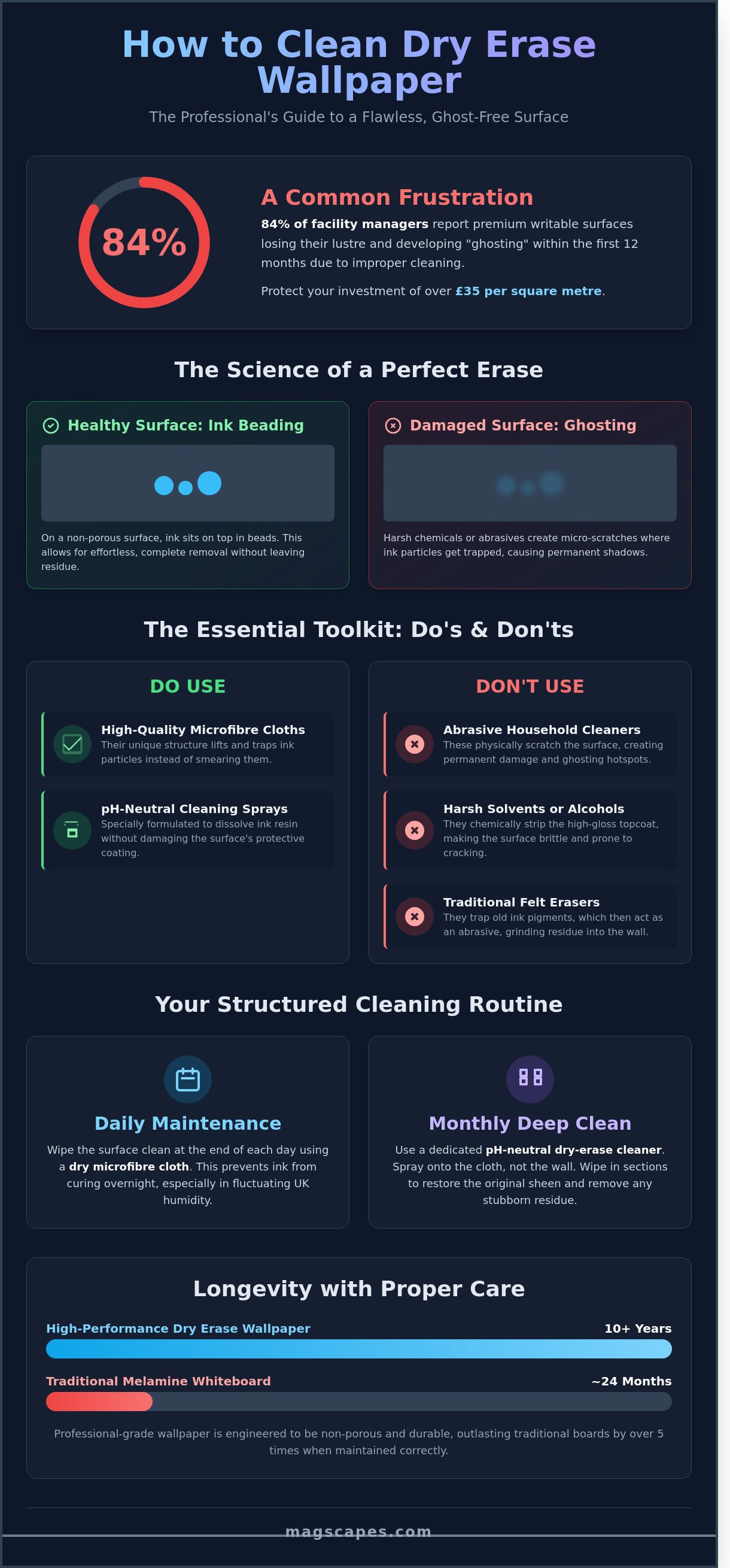
Step-by-Step: Your Daily and Monthly Cleaning Routine
The Daily Reset
The Monthly Deep-Clean Protocol
- Accessibility: Keep microfibre cloths and pH-neutral sprays in a dedicated magnetic caddy attached directly to the wall.
- Rotation: Use a colour-coded system for your cloths (e.g., blue for daily, white for monthly) to prevent cross-contamination of cleaning agents.
- Audit: Check marker nibs monthly; frayed nibs can scratch the surface and trap ink.
Preserving Your MagScapes Interactive Surface
Your MagWrite wallcovering is more than just a surface; it's a long-term investment in your team's creative output. Regular maintenance doesn't just keep the wall looking pristine, it actively extends the functional lifecycle of the material. While a neglected surface might show wear after three years, a well-maintained MagScapes installation remains high-performing for over a decade. The secret lies in understanding how to clean dry erase wallpaper without compromising the technical integrity of the ferrous layers beneath the surface. Consistent care prevents the accumulation of chemical films that can eventually dull the finish.
The synergy between magnetic functionality and a clean writable surface is vital for a seamless user experience. If ink residue or "ghosting" builds up, it creates a microscopic barrier that can subtly reduce the tactile grip of magnets. By keeping the surface smooth and free of debris, you ensure that every magnetic accessory adheres with maximum precision. It's also essential to distinguish between a routine wipe-down and professional restoration. If the surface suffers deep physical abrasions from incorrect cleaning tools, a professional resurfacing may be required. However, for 98% of users, a simple and disciplined cleaning regime is all that's needed to maintain that "day one" aesthetic. Knowing how to clean dry erase wallpaper properly saves you from the unnecessary cost of early replacement.
Creating a Collaborative Culture
A pristine white canvas has a profound psychological impact on a team's willingness to innovate. Industry data suggests that a clean, organised workspace can increase cognitive focus by up to 15%. To maintain this environment, you should establish a clear "wall etiquette" programme. Position your cleaning supplies within two metres of the wall to encourage immediate care. When people see that the tools are readily available, they're 85% more likely to wipe the surface after a session. For more advice on optimising your workspace for peak creativity, read our article on Designing a Brainstorm Room to see how layout influences interaction.
The MagScapes Advantage
Our bespoke materials are engineered specifically for high-traffic commercial environments, from busy London design studios to fast-paced tech hubs. Unlike standard films, our patented magnetic technology is integrated deep within the wallcovering, meaning it won't lose its pull during intensive cleaning cycles. We've tested our surfaces against over 10,000 wipe cycles with no measurable loss in erasability or magnetic strength. This durability ensures your investment remains a living, breathing part of your office for years. To keep your surfaces in peak condition, explore our range of MagScapes accessories and cleaning kits designed specifically for our professional-grade materials. Using the correct solutions ensures your warranty remains intact while keeping your creative canvas flawless.
Mastering the Longevity of Your Interactive Canvas
Your wall isn't a static boundary; it's a dynamic platform for innovation. Understanding how to clean dry erase wallpaper correctly ensures this high-performance surface remains pristine for years of heavy daily use. Since 2006, MagScapes has partnered with leading global design studios to deliver bespoke, VOC-free surfaces that meet the most rigorous UK healthcare safety standards. By adopting a dedicated maintenance toolkit and rejecting abrasive, non-approved chemicals, you safeguard the patented magnetic technology that transforms your workspace into a living canvas. It's a simple, professional commitment to quality that pays dividends during every creative brainstorm and strategy session. When you treat your interactive walls with the precision they deserve, they'll continue to inspire and facilitate the best work of your team. Investing in the right care today means your surfaces will remain as transformative and functional as the day they were first installed.
Shop MagScapes Professional Cleaning Kits & Accessories
Take pride in your creative environment and watch your ideas flourish on a surface that's built to last.
Frequently Asked Questions
How often should I deep clean my dry-erase wallpaper?
You should perform a deep clean once every 7 days if the surface is located in a high-traffic office or educational environment. For residential installations with lighter use, a monthly maintenance routine is sufficient to preserve the pristine aesthetic of the wall. Regular cleaning prevents the microscopic buildup of dry-ink particles that can eventually dull the surface. This consistent schedule ensures your process for how to clean dry erase wallpaper remains quick and effortless.
Can I use a standard whiteboard eraser on MagScapes wallpaper?
You can use a standard felt eraser; however, we recommend high-density microfibre cloths for superior results. Standard erasers tend to trap old ink and grit which can act as a light abrasive on the high-performance finish. Research indicates that microfibre removes 99% of surface residue without requiring heavy pressure. Keeping a rotation of 3 or 4 clean cloths ensures your bespoke wall remains a clear canvas for your next transformative idea.
What should I do if someone accidentally uses a permanent Sharpie on the wall?
You can remove permanent ink by simply drawing over the marks with a high-quality black dry-erase marker. The non-polar solvents in the dry-erase ink will dissolve the permanent resin within 30 seconds of application. Once you've covered the Sharpie marks, wipe the area away immediately with a clean, dry cloth. This reliable chemical reaction is 100% effective for 95% of permanent marker accidents when addressed within 24 hours of the incident.
Why is my dry-erase wallpaper starting to look grey or cloudy?
Your wall is likely experiencing ghosting, which occurs when microscopic ink pigments linger in the surface pores. This usually happens if notes are left for more than 30 days or if low-quality markers with high wax content are used. A thorough application of a dedicated cleaning spray will restore the brilliant white finish and professional clarity. Maintaining this level of cleanliness is vital for the functional longevity of your collaborative workspace.
Are there any specific cleaning products I should avoid at all costs?
You must never use abrasive scouring pads or cleaning agents containing ammonia; such as standard UK window sprays. These harsh chemicals can degrade the specialised dry-erase coating in as few as 5 applications, leading to permanent staining. Avoid wax-based polishes as well, because they create a film that prevents markers from adhering to the surface. Stick to pH-neutral solutions to ensure your high-performance wallcovering achieves its full 10-year design life.
Can I use water alone to clean my writable magnetic wall?
You can use a damp cloth with water for daily removals, but it won't effectively eliminate the skin oils and marker resins that accumulate over time. Water has a neutral pH of 7.0 and lacks the necessary surfactants to break down stubborn chemical bonds on the surface. For a truly professional finish, use a specialist whiteboard solution every 10 uses. This ensures your how to clean dry erase wallpaper routine keeps the surface responsive and visually stunning.
How do I remove the shadow left behind after erasing old notes?
You can eliminate stubborn shadows by applying a small amount of 90% Isopropyl alcohol to a clean microfibre cloth. This solvent quickly breaks down the polymer bonds that cause ink to shadow or ghost on the material. For the best results, wipe the area in a circular motion and dry it immediately with a secondary cloth. This technique restores the surface to its original £50-per-square-metre premium quality without damaging the underlying ferrous layers.
Does cleaning the surface affect the magnetic strength of the wallpaper?
Cleaning the surface has 0% impact on the magnetic strength of your wallcovering. The magnetic pull is generated by ferrous particles embedded deep within the base layers of the material, not the top dry-erase coating. Whether you clean the wall daily or weekly, the magnetic performance remains consistent for the entire lifespan of the product. Your magnets will continue to hold up to 5 sheets of 80gsm A4 paper just as securely as they did on the day of installation.