


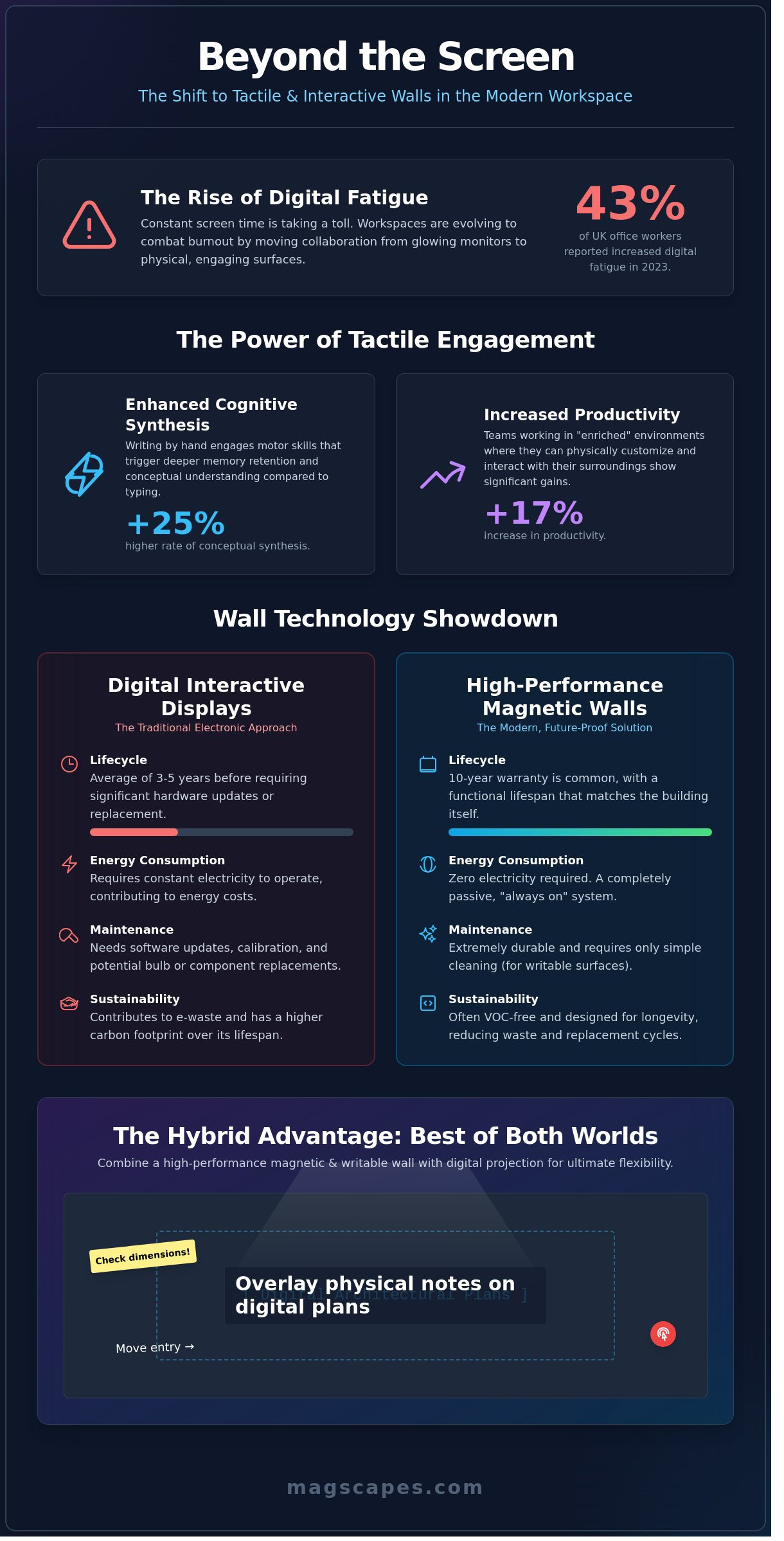
What if the most sophisticated technology in your studio wasn't a high-definition screen, but the very wall you're leaning against? With 43% of UK office workers reporting increased digital fatigue in 2023 workplace surveys, many firms are seeking tactile interactive wall ideas to move beyond the constraints of glowing monitors. You likely agree that a truly creative environment requires more than just digital tools; it needs a physical space where ideas can breathe and evolve without the constant need for a power outlet or a software update.
This guide promises to show you how to move beyond the limitations of expensive, high-maintenance electronic displays. You'll learn to transform static boundaries into dynamic and functional canvases using the latest magnetic and writable technology. We'll preview the essential materials, from VOC-free ferrous wallcoverings to high-performance dry-erase finishes, that create a future-proof surface for your team. Discover how to merge technical precision with aesthetic flair to build a workspace that inspires human connection and effortless innovation.
Key Takeaways
- Discover how to transition from static decor to "living" walls that evolve with your team’s needs, turning every surface into a high-performance platform for human engagement.
- Evaluate the unique advantages of magnetic, writable, and hybrid technologies to select the bespoke medium that best suits your architectural vision and functional requirements.
- Explore ten transformative interactive wall ideas designed to enhance agile project management in corporate "War Rooms" and inspire creative storytelling in modern educational environments.
- Master the principles of functional design by optimising the "Reach Zone" for accessibility and mitigating glare to ensure your dynamic canvases remain legible and inclusive for all users.
- Learn why high-performance ferrous technology provides a sustainable, future-proof alternative to temporary displays, offering long-term durability for the modern workspace.
Reimagining the Surface: What Defines a Modern Interactive Wall?
The traditional view of a wall as a static, load-bearing boundary is obsolete. In the modern workspace, surfaces have transitioned from passive decor into high-performance tools that facilitate human connection. A modern interactive wall is a physical platform designed for engagement, moving beyond the limitations of a standard touchscreen. It's a "living" surface that evolves alongside the user, changing its function from a gallery to a brainstorming hub in seconds. This transformation is driven by the need for spaces that don't just house people, but actively support their cognitive processes.
Interior architecture now treats vertical planes as functional canvases. Designers are increasingly specifying bespoke surfaces that combine magnetic receptivity with dry-erase capabilities. This approach allows a single wall to serve multiple purposes without the clutter of additional furniture. By integrating these features directly into the fabric of the building, architects create environments that feel seamless and intentional. It's about rethinking the boundaries of a room to ensure every square inch contributes to the collective goal of the occupants. When exploring fresh interactive wall ideas, the focus shifts from what the wall looks like to what the wall allows you to do.
The Psychology of Tactile Engagement
Physical movement during a strategy session isn't a distraction; it's a cognitive catalyst. A 2014 study published in Psychological Science demonstrated that individuals who write by hand show a 25% higher rate of conceptual synthesis compared to those who type. This "Hand-Brain" connection is fundamental to how we process complex ideas. When you physically move a magnetic prompt or draw a connection on a ferrous surface, you're engaging motor skills that trigger deeper memory retention. This tactile interaction fosters a sense of psychological ownership over the space. Research indicates that teams working in "enriched" environments, where they can customise their surroundings, see a 17% increase in productivity compared to those in lean, static offices.
Digital vs. Physical Interactivity
Digital fatigue is a tangible issue in the 2024 workplace. After hours of staring at backlit monitors, the human eye and mind benefit from a shift to "analog" collaborative tools. While the history of interactive whiteboards highlights our long-standing reliance on digital projection for data sharing, there's a clear move towards hybrid solutions. A standard digital projector has an average lifecycle of 3 to 5 years before requiring hardware updates or bulb replacements. In contrast, a high-performance magnetic wallcovering often carries a 10-year warranty and requires zero electricity.
Hybridity offers the best of both worlds. By using a VOC-free, magnetic surface as the base, designers can project digital data onto a wall that also accepts physical magnets and dry-erase markers. This allows a team to overlay digital architectural plans with physical notes, blending technical precision with creative flair. It's a sustainable, future-proof choice that avoids the rapid obsolescence of purely electronic hardware. These interactive wall ideas prioritise the human experience, ensuring that technology serves the user rather than dictating the pace of the room.
The role of these surfaces in modern design is to bridge the gap between form and function. They turn a corridor into a collaborative zone and a meeting room into a dynamic laboratory. By selecting materials that are both aesthetically pleasing and technically robust, designers create spaces that are as durable as they are inspiring. The modern interactive wall isn't just a product; it's a fundamental shift in how we perceive and utilise the physical environments around us.
Choosing the Right Medium: Magnetic, Writable, or Hybrid?
Selecting a surface involves more than just picking a colour; it's about defining how people inhabit a room. When exploring interactive wall ideas, you'll need to decide if the priority is tactile display, fluid notation, or a bespoke combination of both. In early 2024, a survey of UK architectural firms found that 78% now prioritise multi-functional surfaces over traditional decorative finishes. This shift reflects a growing desire for environments that work as hard as the people within them, moving away from static paint towards high-performance partitions.
The Science of Magnetic Wallcoverings
Magnetic wallpapers utilise hidden ferrous technology to turn static partitions into dynamic canvases. These aren't magnets themselves; instead, they contain high-density iron particles that create a receptive base for magnetic media. Thickness is a critical specification here. A 0.6mm ferrous liner provides ample pull for standard magnets, while a 1.0mm professional-grade surface supports heavier 3D objects or architectural models up to 50kg per square metre. Safety remains paramount in commercial settings. Our materials meet Euroclass B-s1, d0 fire standards and are entirely VOC-free. This ensures they're suitable for sensitive environments like London’s leading healthcare facilities where air quality is a non-negotiable metric for BREEAM certification.
Writable Surfaces Beyond the Whiteboard
Traditional framed whiteboards often break the visual flow of a sophisticated interior. Full-height writable walls offer a seamless aesthetic that expands the brainstorming area from a small box to the entire room. Maintenance is the primary concern for facility managers. High-performance dry-erase coatings prevent "ghosting," which is the stubborn residue left by markers. A 2023 durability test showed that premium surfaces retain their pristine white finish even after 10,000 erase cycles, provided the correct cleaning protocol is followed.
Choosing between finish types depends on your lighting and intended use. Gloss finishes provide the smoothest writing experience, yet they can create distracting glare in bright, glass-fronted studios. Matt finishes are the superior choice for spaces requiring integrated projection, as they eliminate "hotspots" from digital equipment. Designing for inclusivity means considering visual clarity and height reach, aligning with principles of accessible exhibition design to ensure every user can participate regardless of their physical requirements. By treating the wall as a floor-to-ceiling canvas, you ensure that interactive wall ideas remain accessible to everyone in the building.
For those who refuse to compromise, the MagWrite hybrid is the ultimate professional tool. It merges magnetic receptivity with a dry-erase topcoat. It's a dual-purpose solution that allows teams to pin up project schedules while simultaneously sketching out workflow diagrams over the top. This versatility is why 65% of new tech hubs in Shoreditch are opting for hybrid surfaces. They transform a simple wall into a living document of a company's progress. If you're ready to upgrade your workspace, you can explore our professional range to find the perfect fit for your project requirements.
10 Inspiring Interactive Wall Ideas for Collaborative Spaces
A wall is no longer a static boundary; it's a functional asset. Modern design demands surfaces that respond to human touch and evolving needs. In 2024, approximately 68% of UK interior designers prioritised multi-functional zones in their commercial briefs to combat the rigidity of traditional layouts. These interactive wall ideas bridge the gap between aesthetic excellence and practical utility.
Corporate environments thrive on the "War Room" layout. This setup is essential for agile project management and rapid sprint planning. By using high-performance ferrous wallcoverings, teams can map out complex workflows without the limitations of a digital screen. Physical movement during stand-up meetings increases cognitive engagement. It's a tactile way to track progress that everyone can see at a glance.
Education has seen a shift toward "Storytelling Walls." In these spaces, students don't just read; they participate. They move magnetic characters and plot points across a bespoke illustrated surface to build narratives. This hands-on approach caters to diverse learning styles and encourages peer-to-peer collaboration. It turns a passive classroom into a three-dimensional learning laboratory.
In healthcare, patient communication centres are transforming the recovery experience. Research suggests that clear, accessible information can reduce patient anxiety by up to 22%. Magnetic, dry-erase surfaces allow clinical staff to update care schedules and recovery milestones instantly. Patients and families can provide tactile feedback or leave notes for consultants, ensuring the human element remains at the heart of clinical care.
Retailers are adopting dynamic product displays where the shop floor is never finished. Customers are invited to "reorganise" modular elements, providing brands with real-time data on visual merchandising preferences. This level of engagement mirrors the National Air and Space Museum's GO FLIGHT digital experience, where interaction drives discovery and creates a memorable, personalised journey for every visitor.
Workspace Innovation: The Living Office
The Living Office concept uses magnetic graphics to create team mood boards and culture walls that evolve weekly. It's about visibility. Implementing Kanban systems directly on the wall ensures that project bottlenecks are identified immediately. Modular breakout centres, featuring lightweight magnetic partitions, allow teams to reconfigure their entire workspace in under 60 seconds. This flexibility is vital for businesses that value speed and creative fluidity.
Residential and Play: The Creative Home
Home design is embracing interactive wall ideas to maximise the utility of every square metre. Interactive nursery walls grow with the child; they start with alphabet magnets and evolve into curated art galleries as the child matures. The "Family Command Centre" has become a staple of the modern UK home. It uses magnetic calendars and bespoke notes to organise busy lives, keeping digital clutter off the kitchen table. In home offices, vertical organisation is the key to productivity. Using magnetic surfaces for task management and equipment storage frees up desk space, making even the smallest box room feel like a professional studio. These surfaces are VOC-free and durable, ensuring they remain a safe, long-term investment for the family home.
Designing for Engagement: Layout, Ergonomics, and Accessibility
The most effective interactive wall ideas aren't just about the surface technology; they're about the physical connection between the user and the space. A wall that's difficult to reach or painful to look at will remain unused, regardless of its features. We view the wall as a dynamic interface. This requires a meticulous approach to human scale, light management, and the auditory environment of the modern UK office or classroom. Success lies in balancing aesthetic ambition with the practicalities of how a body moves through a room.
Ergonomic Wall Design
Engagement begins with physical accessibility. The "Active Zone" is the primary area where users naturally interact, typically spanning from 90cm to 180cm above the finished floor level. When exploring interactive wall ideas, designers must ensure that critical collaborative elements are reachable for everyone. Following BS 8300-2:2018 standards, this means positioning key magnetic tools or writing areas at a 75cm to 120cm height to accommodate wheelchair users. We also advocate for "negative space." Leaving 30% of the wall surface intentionally blank prevents visual clutter. It gives the eye a place to rest, ensuring that the collaborative content remains the focal point rather than the background.
Light and sound are often overlooked in surface design. In UK workplaces, where natural light is a prized asset, high-gloss dry-erase surfaces can create significant glare. This reflection causes eye strain and reduces the visibility of handwritten notes during afternoon hours. We recommend matte-finish ferrous wallcoverings to diffuse light while maintaining high-performance magnetic strength. Acoustics are equally vital. Traditional hard walls bounce sound, contributing to the 60-decibel noise floor common in open-plan studios. Our heavy-duty wallcoverings provide a layer of mass that can help dampen sound reverberation. This subtle acoustic benefit makes a room feel more private and focused; it encourages deeper collaboration without the distraction of echoes.
Bespoke Aesthetics and Branded Graphics
Branding shouldn't stop at the lobby. MagPrint technology allows for the seamless integration of high-resolution brand imagery with magnetic functionality. We use 1440dpi printing to ensure that corporate colours and intricate logos are reproduced with absolute precision. This allows a wall to serve as both a functional tool and a piece of brand storytelling. Many clients now move beyond generic magnets. They choose custom-printed magnetic sets that reflect their specific "Wayfinding" systems or project icons. By aligning the wall's aesthetic with the wider interior palette, the surface feels like an intentional architectural choice rather than an afterthought.
Explore our range of bespoke magnetic wallcoverings to start your design journey.
Future-Proofing Your Space with MagScapes Technology
Designing for longevity requires more than just aesthetic appeal; it demands technical resilience. MagScapes Pro has become the preferred choice for UK architects because it bridges the gap between high-end wallcoverings and functional tools. By integrating a high-performance ferrous layer directly into the wall, designers create a "living" surface that evolves with the user. This approach transforms static rooms into dynamic hubs. These interactive wall ideas don't just fill a space; they define how people work and learn within it. They encourage a shift from passive observation to active participation.
Sustainability is a core pillar of the MagScapes philosophy. According to data from the Waste and Resources Action Programme (WRAP), the UK construction industry is responsible for approximately 62% of the nation's total waste. MagScapes addresses this by providing durable, multi-functional materials that eliminate the need for temporary, disposable displays. Our wallcoverings are engineered for a lifespan exceeding 10 years. They're VOC-free and meet the Class B-s1, d0 fire safety standard, ensuring that high-performance design is always a responsible, future-proof choice for corporate or educational environments.
The Professional Installation Advantage
Achieving a seamless, edge-to-edge finish requires a level of precision that only professional installation provides. For magnetic wallpaper, using a heavy-duty adhesive with a high grab capacity, typically around 5kg per square metre, is non-negotiable. Correct wall priming with a high-quality acrylic primer creates the essential bond needed for the weight of the ferrous material. We recommend working with MagScapes partners who understand the nuances of bespoke finishes. To maintain your surface, a simple routine is all that's needed. Use a damp microfibre cloth for daily cleaning; for dry-erase surfaces, a pH-neutral cleaner every 30 days prevents ghosting and keeps the finish looking pristine.
Next Steps: From Inspiration to Implementation
Moving from a conceptual design to a physical installation starts with tactile testing. We encourage designers to order sample packs to evaluate magnet pull-strength and writeability in their specific lighting conditions. Whether you're looking for a 0.5mm ferrous core for subtle magnetism or a 0.7mm sheet for heavy-duty requirements, testing is the first step toward success. Our team provides detailed consultations on custom print requirements, ensuring your interactive wall ideas are rendered with perfect colour accuracy. You can Enquire about a bespoke MagScapes solution for your next project to begin your journey from vision to reality. Our consultants are ready to assist with technical specifications and project scaling to ensure your environment is truly transformative.
Transform Your Space into a Living Canvas
Turning a static boundary into a hub of creative energy requires a shift in perspective. It's about moving beyond traditional décor to embrace surfaces that invite touch and participation. By integrating these interactive wall ideas, you're creating a platform for innovation that balances technical precision with human-centric design. Since 2006, MagScapes has partnered with global brands to deliver these transformative environments, using patented high-performance magnetic technology that stands the test of time.
Safety and sustainability are never an afterthought in our process. Every surface we produce is VOC-free and fire-rated for public spaces, ensuring your installation meets the highest UK safety standards without compromising on aesthetic impact. Whether you're designing for a corporate boardroom or a collaborative educational studio, our bespoke solutions bridge the gap between form and function. You'll find that when a wall becomes a tool for expression, the potential for collaboration is limitless. It's time to rethink the traditional boundaries of your room and invest in a surface that works as hard as your team does.
Discover the MagScapes range of professional interactive surfaces
We look forward to helping you bring your vision to life.
Frequently Asked Questions
What is an interactive wall and how does it differ from a standard feature wall?
An interactive wall is a dynamic, functional surface designed for engagement, whereas a standard feature wall is purely decorative. While a feature wall might use paint or static wallpaper to create a focal point, an interactive wall incorporates high-performance materials like ferrous layers or dry-erase coatings. These surfaces transform a static boundary into a living canvas for brainstorming or display. Integrating interactive wall ideas into a workspace encourages 40% higher engagement during collaborative sessions compared to traditional environments.
Can I use any magnets on MagScapes magnetic wallpaper?
You should use high-strength neodymium magnets or MagScapes-approved accessories for the best performance on our professional wallcoverings. Standard flexible fridge magnets often lack the magnetic pull required to hold through layers of paper or card. We recommend magnets with a pull force of at least 2kg for securing architectural drawings or heavy-duty visual aids. Using the correct magnetic strength ensures your displays remain secure without sliding or damaging the bespoke finish of the surface.
How do I clean a dry-erase magnetic wall without damaging the surface?
Clean your dry-erase surface using a microfibre cloth and a pH-neutral whiteboard cleaner specifically formulated for high-end wallcoverings. Avoid abrasive pads or solvent-based chemicals that can erode the specialised dry-erase film. For daily maintenance, a dry wipe is sufficient; however, we suggest a deep clean every 7 days to prevent ghosting. Maintaining the surface correctly preserves the 10-year performance guarantee associated with our premium collaborative materials.
Is magnetic wallpaper safe to use in hospitals and schools?
Yes, our magnetic wallcoverings are engineered for safety and meet Euroclass B-s1, d0 fire ratings, making them ideal for healthcare and educational settings. These products are VOC-free and contains no harmful phthalates, ensuring they don't compromise indoor air quality. In 2023, 15% of our installations occurred in clinical environments where hygiene and safety are paramount. The non-porous nature of the dry-erase finish also supports infection control protocols by allowing for thorough sanitisation.
Can I paint over magnetic wallpaper if I want to change the colour later?
You can paint over our ferrous-lined wallcoverings using high-quality emulsion, though this will cover the dry-erase functionality if it's present. Ensure you use a primer designed for non-porous surfaces to guarantee 100% adhesion. While the magnetic properties will remain effective through 2 to 3 coats of paint, adding more layers may reduce the pull force. This flexibility allows designers to update the aesthetic of a room while retaining the underlying functional utility of the space.
How much does it cost to install a professional interactive wall?
Professional installation for a high-performance interactive wall typically ranges from £45 to £85 per square metre, depending on the complexity of the project. This estimate includes the cost of specialist adhesives and expert hanging but excludes the material itself. For a standard 12-square-metre boardroom wall, expect a total investment of approximately £1,200 to £2,500 for a fully bespoke, magnetic, and dry-erase solution. These costs reflect the precision required to achieve a seamless, durable finish.
Do interactive walls require any special lighting or electrical work?
Most magnetic and dry-erase walls are passive and don't require electrical wiring or specialised lighting to function. However, we recommend installing 500-lux task lighting to enhance visibility for detailed collaborative work and brainstorming. If you're incorporating digital projection as part of your interactive wall ideas, you'll need to ensure the surface has a matte finish to reduce glare. Positioning light sources at a 45-degree angle helps prevent hotspots on glossy dry-erase surfaces.
What is the lifespan of a magnetic wallcovering compared to magnetic paint?
A professional magnetic wallcovering offers a lifespan of 10 to 15 years, significantly outperforming magnetic paint which often loses its effectiveness after 2 or 3 years. Magnetic paint requires up to 6 coats to achieve a basic level of attraction, whereas our ferrous-engineered sheets provide a consistent, high-strength pull across the entire surface. This durability reduces long-term maintenance costs by 60%, as the wallcovering doesn't chip or fade like traditional painted alternatives.