


Table of Contents
- What Is Ghosting on Magnetic Walls?
- Understanding the Root Causes of Ghosting
- How to Restore Magnetic Whiteboard Surface
- Best Whiteboard Cleaners for Magnetic Walls
- Preventative Maintenance Routines
- Surface Preparation and Material Compatibility
- Preventing Ghosting Through Environmental Control
- Conclusion
Last Updated: August 7, 2026
What Is Ghosting on Magnetic Walls?
Ghosting on magnetic walls is the gradual appearance of faint, persistent marks or discolouration on the magnetic surface that remain even after cleaning. These shadow-like stains typically form where objects have rested or where frequent contact occurs, creating a visible outline that mars the wall's appearance. Unlike temporary marks from dry-erase pens, ghosting represents deeper surface degradation that standard erasers and basic cleaning cannot remove.
The phenomenon affects both whiteboard-style magnetic surfaces and painted magnetic walls. Ghosting typically manifests as darker patches, faint shadows, or discoloured zones that persist across repeated cleaning cycles. In educational settings, these marks often appear where students consistently place their hands or where frequently-used magnets sit. The issue is particularly visible on white or light-coloured magnetic surfaces.
Understanding the Root Causes of Ghosting
Ghosting results from specific environmental and mechanical factors that interact with the magnetic wall surface. Identifying the root cause helps you implement targeted prevention strategies.
Thermal Bridging and Temperature Fluctuations
Thermal bridging occurs when areas of a wall conduct heat differently than surrounding regions, creating localised temperature variations that affect the magnetic surface. These temperature differences drive moisture and particulate matter toward cooler zones, where they accumulate more readily. Temperature fluctuations also cause the surface material to expand and contract at different rates, making it more receptive to staining.
The solution involves ensuring proper insulation behind magnetic walls and maintaining stable indoor temperatures. MagScapes magnetic wallcoverings are designed with thermal-aware installation protocols that account for these variations, reducing ghosting likelihood in problem areas.

Brownian Motion and Particulate Matter
Brownian motion describes the random movement of microscopic particles suspended in air. In indoor environments, dust, soot, and other particulate matter move constantly through the air. Where air circulation is poor, such as in corners, near thermal bridges, or in spaces with limited ventilation, particles settle more readily onto surfaces.
These particles are attracted to magnetic surfaces through electrostatic forces and simple adhesion. Indoor air quality directly impacts ghosting severity. Facilities with poor ventilation experience faster ghosting accumulation than those with modern HVAC systems that filter particulate matter effectively. Regular air filter replacement and maintaining proper air circulation significantly reduce ghosting development.
Electrostatic Attraction and Soot Accumulation
Magnetic surfaces naturally develop static charges during normal use, attracting negatively-charged particles including soot from heating systems, toner particles from printers, and microscopic dust. Soot accumulation is particularly problematic in facilities with gas heating systems or in urban environments with higher outdoor air pollution.
Managing electrostatic attraction requires both environmental control and surface preparation. Using high-performance coatings with lower surface porosity reduces sites where particles can lodge. Proper grounding and humidity control also minimise static charge buildup.
How to Restore Magnetic Whiteboard Surface
Assessing the Extent of Ghosting
Before selecting a cleaning approach, evaluate how deeply ghosting has affected your magnetic surface. Light ghosting, faint marks visible only at certain angles, requires gentler intervention than heavy ghosting where marks are obvious from any viewing angle.
Assess ghosting by examining the surface under bright, direct light from multiple angles. Gently run a microfibre cloth across the affected area without applying cleaning solution. If the marks disappear or fade significantly with dry wiping, the ghosting is primarily surface-level particulate matter. If the marks persist, the issue involves deeper staining or surface degradation.
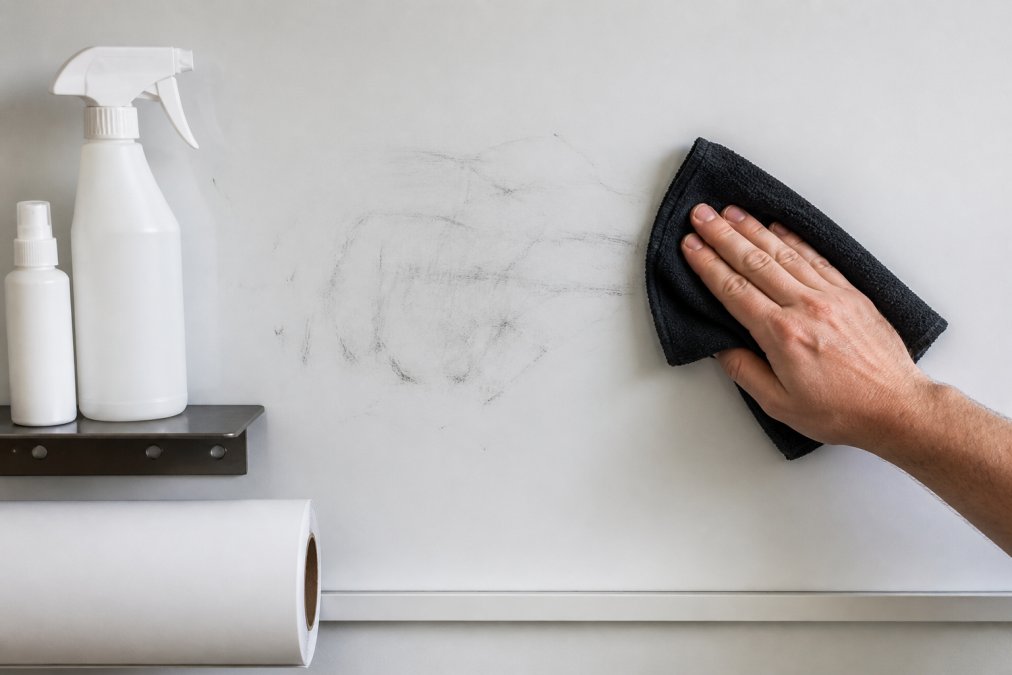
Cleaning Steps for Stubborn Ghosting Marks
Step 1: Prepare the surface (5 minutes) Ensure the magnetic wall is dry and at room temperature. Use a dry microfibre cloth to remove loose dust and particulate matter.
Step 2: Apply appropriate cleaning solution (2 minutes) For light ghosting, use a standard dry-erase board cleaner or mild detergent solution. For stubborn soot-based ghosting, a slightly stronger solution is needed. The MagScapes Write Cleaning Kit includes a 250ml cleaner specifically formulated for magnetic surfaces, designed to dissolve surface stains without damaging the coating.

Step 3: Allow dwell time (3-5 minutes) Let the cleaning solution sit on the ghosting marks for several minutes. This allows the chemical action to break down stains without requiring aggressive scrubbing.
Step 4: Wipe with gentle pressure (3-5 minutes) Using a clean, damp microfibre cloth, wipe the affected area with gentle, circular motions. Avoid pressing hard or using back-and-forth scrubbing, which can damage the surface coating.
Step 5: Rinse and dry (5 minutes) Wipe the area with a cloth dampened with clean water to remove any cleaning solution residue. Dry thoroughly with a dry microfibre cloth.
Step 6: Inspect results (2 minutes) Examine the cleaned area under bright light. If ghosting persists, repeat steps 2-5. Stubborn marks may require two or three cycles to fully resolve.
Best Whiteboard Cleaners for Magnetic Walls
Choosing the right cleaning product directly impacts both the effectiveness of ghosting removal and the long-term durability of your magnetic surface. Generic glass cleaners or harsh degreasers can damage the protective coating on magnetic wallcoverings.
The MagScapes Write Cleaning Kit (£7.49) is purpose-built for magnetic surfaces. It includes a 250ml bottle of cleaner formulated to dissolve dry-erase pen residue, dust, and light ghosting marks without compromising the surface finish, plus a 20cm square microfibre cloth.
For facilities that prefer existing cleaning supplies, a solution of mild detergent and water works adequately for light ghosting. Mix one part mild dish soap with ten parts water. Avoid bleach-based cleaners, acetone, or alcohol-based solutions, which can degrade the coating on magnetic wallcoverings.
Never use paper towels or rough cloths for cleaning magnetic walls. Microfibre cloths are the only appropriate tool, as their fine synthetic fibres lift particles without abrading the coating.
Preventative Maintenance Routines
Preventing ghosting is far more effective than removing it after it develops. Establishing consistent cleaning schedules and addressing environmental factors stops ghosting before it becomes visible.
Daily and Weekly Cleaning Protocol
Daily cleaning (5 minutes): At the end of each working day, wipe the magnetic wall with a dry microfibre cloth. This removes dust, fingerprints, and loose particulate matter before they settle into the surface. Daily dry wiping is the single most effective ghosting prevention measure.
Weekly deep clean (15 minutes): Once per week, perform a more thorough cleaning using the gentle wet-cleaning protocol described above. Use your chosen cleaning solution to address any marks that dry wiping missed. Focus weekly cleaning on high-contact zones: areas where magnets are frequently placed and where people rest their hands.

Monthly Deep-Clean Schedule
Monthly comprehensive cleaning (30 minutes): Once per month, perform a thorough cleaning of the entire magnetic wall surface. This prevents ghosting from accumulating in less-obvious areas and maintains uniform appearance. During monthly cleaning, inspect the entire surface under bright light for early signs of ghosting and check for any areas where the magnetic coating may be compromised.
Seasonal Maintenance for Thermal Control
Seasonal inspection (quarterly): Every three months, assess whether environmental factors are contributing to ghosting. Check that air filters in HVAC systems are clean and that ventilation is functioning properly. During winter months when heating systems work harder, increase cleaning frequency if ghosting develops more rapidly.
Surface Preparation and Material Compatibility
How a magnetic wall is prepared during installation directly determines its susceptibility to ghosting. Proper surface preparation creates a durable, stain-resistant finish that resists ghosting far more effectively than inadequately prepared surfaces.
Preparing Drywall for Magnetic Installation
Before installing magnetic wallcoverings, drywall must be properly prepared. Any existing paint, wallpaper, or surface irregularities must be removed or repaired. Fill any dents, holes, or irregularities with spackling compound and sand smooth once dry.
Clean the drywall thoroughly with a damp cloth to remove dust, then allow it to dry completely before proceeding. Ensure the drywall is not damaged by moisture or mould. If the wall has been exposed to condensation or water damage, allow it to dry completely and treat any mould before installation.
Choosing the Right Primer and Paint
Not all primers and paints are compatible with magnetic wallcoverings. The surface finish affects both the adhesion of the magnetic material and its resistance to ghosting.
Use a stain-blocking primer before applying any paint. This prevents existing stains or marks on the drywall from bleeding through the final finish and seals the porous surface of drywall, creating a uniform base that resists particulate accumulation.
For painted magnetic surfaces, select a high-performance coating with a non-porous finish. Glossy finishes resist ghosting better than matte finishes because they provide fewer sites where particles can lodge. MagScapes WritePaints Gloss White Dry-Erase Kit (£49.50) provides both the primer and topcoat needed for creating a durable, ghosting-resistant magnetic surface.

Preventing Ghosting Through Environmental Control
Environmental factors, air quality, temperature stability, and humidity levels, determine how quickly ghosting develops. Controlling these factors is often more effective than increasing cleaning frequency.
Managing Indoor Air Quality and Condensation
Ventilation systems: Ensure HVAC systems are properly maintained with clean filters. Dirty air filters allow dust and particulate matter to circulate more freely, accelerating ghosting accumulation. Replace filters according to manufacturer recommendations, typically every 3 months in standard office environments and monthly in high-traffic facilities.
Humidity control: Maintain indoor humidity between 30-50% for optimal conditions. In UK climates where winter humidity can be high, use dehumidifiers in areas prone to condensation near external walls. Low humidity increases static electricity and electrostatic attraction of particles to surfaces.
Condensation prevention: Condensation on or near magnetic walls indicates poor thermal control. Identify and address the source: inadequate insulation, thermal bridges, or cold exterior walls. Installing thermal breaks or additional insulation behind magnetic walls in problem areas prevents the temperature gradients that drive condensation and ghosting.
Thermal Breaks and Insulation Considerations
Thermal bridges create localised areas where ghosting develops faster, typically found where external walls meet the building interior, around windows, or where structural elements conduct cold from outside.
Identifying thermal bridges: Use an infrared thermometer to identify temperature variations across your magnetic wall. Areas noticeably cooler than surrounding regions are thermal bridges and require more frequent cleaning.
Installing thermal breaks: A thermal break is an insulating layer that interrupts the path of heat conduction. In new installations, ensure adequate insulation is present behind magnetic wallcoverings. In existing installations, adding insulating panels or spray foam behind the magnetic surface can reduce thermal bridging.
Magnetic wallcovering advantages: Premium magnetic wallcoverings like MagScapes products are designed with thermal awareness. Proper installation protocols account for thermal variations, reducing ghosting susceptibility compared to basic magnetic paint. For facilities in older buildings with poor insulation, magnetic wallcoverings installed over properly insulated drywall provide both superior ghosting resistance and improved energy efficiency.
Preventing ghosting on magnetic walls requires a multi-faceted approach combining proper surface preparation, consistent maintenance, and environmental control. The investment in quality materials and preventative routines protects your magnetic wall investment and maintains the professional appearance essential for collaborative spaces. MagScapes magnetic wallcoverings, paired with the Write Cleaning Kit and a structured maintenance schedule, provide a comprehensive solution that keeps your interactive walls pristine and fully functional for years.
Frequently Asked Questions
What does ghosting on a magnetic wall look like?
Ghosting appears as faint, shadowy marks or discolouration on your magnetic wall surface, often following the outline of objects that have been in contact with the wall or repeated writing areas. These marks typically remain even after standard cleaning. The affected areas may look darker or slightly stained compared to the surrounding surface, and they're caused by particulate matter, thermal bridging effects, and electrostatic attraction pulling dust and soot onto specific zones of your magnetic wall.
How often should you deep clean a magnetic wall to prevent ghosting?
Deep clean your magnetic wall monthly to prevent ghosting buildup, more frequently in high-traffic areas or environments with poor indoor air quality. Weekly light cleaning with a microfibre cloth removes daily dust and prevents particulate matter accumulation. If your space has thermal bridges, condensation issues, or heavy use (such as classrooms or healthcare settings), increase deep cleaning to twice monthly. Regular maintenance is far more effective than attempting to remove stubborn ghosting marks after they've set into the surface.
Will a dehumidifier help prevent ghosting on magnetic walls?
Yes, a dehumidifier can reduce ghosting by controlling condensation and moisture levels, which contribute to thermal bridging and soot accumulation on your magnetic wall surface. Excess moisture creates temperature fluctuations that attract particulate matter through electrostatic attraction. Maintain indoor humidity between 30-50% for optimal magnetic wall performance. However, dehumidification alone won't prevent ghosting entirely, you must combine environmental control with regular preventative maintenance routines and proper surface preparation to achieve lasting results.
Is ghosting on magnetic walls permanent?
Ghosting is not permanent if caught early and treated properly. Light ghosting marks can be removed using the right whiteboard cleaners and microfibre cloths with gentle pressure. However, if ghosting is left untreated for extended periods, particulate matter and pigment migration can become more difficult to remove and may require professional restoration. This is why preventative maintenance routines are essential, regular cleaning prevents ghosting from becoming ingrained in your magnetic wall's surface and maintains its high-performance coating integrity.
This article was written using GrandRanker