


Table of Contents
- How Magnetic Wall Solutions Work: A Guide
- The Physics Behind Magnetic Receptivity
- Types of Magnetic Wall Solutions
- Magnetic Wallcovering Installation Guide
- Magnetic Wall Paint vs Wallcovering: Which Performs Better
- Best Magnets for Magnetic Wall Systems
- Benefits of Magnetic Walls in Professional and Creative Spaces
- Maintenance and Care for Long-Term Performance
- Frequently Asked Questions
Last Updated: September 1, 2026
How Magnetic Wall Solutions Work: A Guide
Magnetic wall solutions transform ordinary surfaces into interactive, functional spaces by combining ferrous materials with strategically chosen magnets. A ferrous-receptive surface, whether paint, wallcovering, or liner, creates magnetic field alignment that allows magnets to hold securely across the entire wall (peer-reviewed research). This guide explains how magnetic wall solutions work, the physics behind them, and how to choose and install the right system for your space.
Walls become collaborative tools rather than passive boundaries. A classroom gains an interactive learning surface. An office war room becomes a visual management hub. A home office transforms into an organised command centre. Understanding how these systems perform, what separates high-quality solutions from disappointing ones, and how to implement them correctly is essential.
The Physics Behind Magnetic Receptivity
Magnetic wall solutions work because ferrous materials respond to magnetic fields. When you place a magnet against a ferrous surface, the magnetic field aligns iron particles, creating an attractive force that holds the magnet securely in place. Stronger ferrous layers with higher density hold magnets more reliably.
Receptivity is a rating system measuring how effectively a magnetic wall surface holds magnets. A 5/5 rating means the surface performs like a fridge door, magnets stick with confidence and hold heavy objects. Lower ratings (2/5 or 3/5) mean only lightweight magnets hold securely.

Magnetic performance depends on ferrous density and thickness. Paint-based magnetic solutions suspend iron particles in liquid, limiting ferrous material per coat. Even with multiple coats, they typically achieve 2/5 to 3/5 receptivity at best (peer-reviewed research). Ferrous wallcoverings, manufactured at controlled thickness (0.5mm to 0.8mm), deliver consistent, predictable performance across the entire surface (peer-reviewed research).
Temperature, humidity, and substrate variation don't affect quality ferrous wallcovering the way they affect paint. The magnetic field alignment remains stable and the holding power constant.
Types of Magnetic Wall Solutions
Ferrous Wallcoverings and Liners
Ferrous wallcoverings are thin, flexible sheets of ferrous material applied directly to walls using wallpaper adhesive. They're available in different thicknesses and receptivity ratings suited to different applications.
MagLiner is a 0.5mm ferrous liner scoring 5/5 for magnet receptivity. Applied using paste-the-wall method like traditional wallpaper lining, it creates a fully magnetic surface beneath any finish: paint, wallpaper, fabric, or digital prints. MagWrite is a gloss white dry-erase surface with 4/5 receptivity, turning your wall into a writable whiteboard that holds magnets. MagChalk offers a matt black chalk-receptive surface, equally magnetic, ideal for creative spaces and classrooms. MagPaintable is a pre-primed white wallcovering with 2/5 receptivity that accepts emulsion paint.

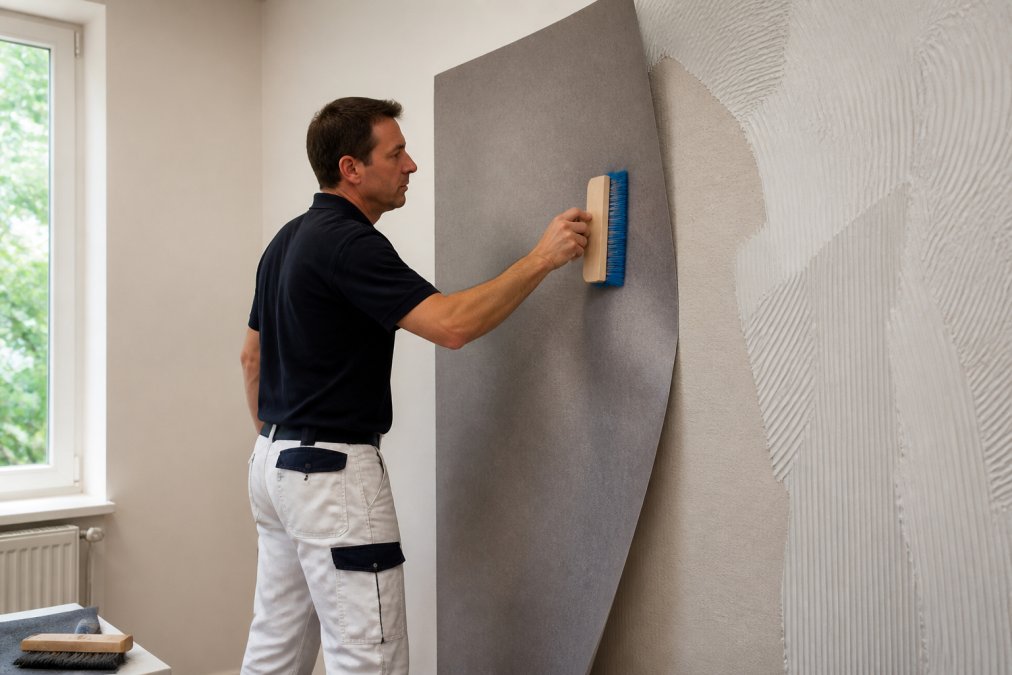
Installation is straightforward for professional decorators. Prepare the wall surface, apply recommended adhesive (MagFix for absorbent surfaces, MagVOV for non-absorbent), position the wallcovering, and smooth it into place. Curing typically takes 24 hours before applying a top finish or using the surface.
Writable Magnetic Surfaces
Writable magnetic surfaces combine dry-erase or chalk-receptive writing surfaces with magnetic holding capability. MagWrite and MagChalk exemplify this category, both offering 4/5 magnet receptivity. The writing surface is hard-wearing, markers wipe clean without ghosting, and the surface resists degradation through years of use. Both are fire-rated and carry 10-year warranties, suitable for commercial and educational installations.
MagWrite's gloss white finish is professional and contemporary, ideal for modern offices. MagChalk's matt black surface signals an active, creative space. Both integrate into designed interiors far better than traditional framed whiteboards or chalkboards.
Mobile Magnetic Furniture
For spaces where permanent installation isn't possible, mobile magnetic furniture offers full functionality without wall commitment. MagPivot is a freestanding magnetic whiteboard on lockable castors, 1200mm wide and 1925mm tall, delivering 5/5 magnet receptivity. MagCaddy adds integrated storage shelves and a top surface, functioning as a magnetic whiteboard, space divider, and storage unit simultaneously.
Both feature premium gloss white dry-erase surfaces, fire-resistant materials, and 10-year warranties.
Magnetic Wallcovering Installation Guide
Installing a magnetic wallcovering correctly is essential for achieving reliable magnetic performance and a professional finish.
Preparing Your Wall Surface
Surface preparation determines whether your magnetic wallcovering adheres properly and performs reliably long-term. Remove any existing wallpaper completely. Fill holes and cracks with appropriate filler, then sand the wall smooth. The surface should be clean, dry, and free of dust, grease, or contaminants. Wipe the wall with a damp cloth and allow it to dry completely. For non-absorbent surfaces like tile or gloss paint, light sanding improves adhesive grip.
Measure your wall carefully and calculate the quantity of wallcovering needed. Ferrous wallcoverings typically come in rolls 61cm to 120cm wide. Order slightly more than your calculations suggest for repairs or future adjustments.
Applying the Ferrous Wallcovering
Mix your adhesive according to manufacturer's instructions. MagScapes recommends MagFix for absorbent surfaces and MagVOV for non-absorbent surfaces. Both are ready-mixed, eliminating on-site preparation.
Apply adhesive evenly across the wall using a roller or brush. Position the first length of ferrous wallcovering at the top and smooth it downward using a decorator's brush or plastic smoother, working out air bubbles as you go. Overlap seams by approximately 5cm and trim later with a sharp utility knife for a clean joint.
Work methodically across the wall, ensuring each length is smooth and properly adhered before moving to the next.
Finishing and Curing
Allow the ferrous wallcovering to cure for 24 hours before applying any top finish or using the surface. This curing period is critical, the adhesive needs time to set fully, and premature use can compromise the bond.
For products like MagLiner designed to be finished with paint, wallpaper, or fabric, apply your chosen top finish once curing is complete. For pre-finished products like MagWrite or MagChalk, you can begin using them immediately after curing.
Magnetic Wall Paint vs Wallcovering: Which Performs Better
Magnetic paint suspends iron particles in liquid and requires multiple coats, typically three to five, to achieve meaningful magnetic performance. Even under ideal conditions, magnetic paint rarely exceeds 2/5 to 3/5 receptivity. Application is time-consuming, drying time between coats extends the project across multiple days, and final performance depends heavily on the decorator's skill and consistency. modular storage systems.
Ferrous wallcoverings deliver superior performance because the ferrous layer is manufactured at controlled thickness and density before installation. A 0.5mm MagLiner sheet delivers 5/5 receptivity consistently, regardless of application technique or environmental conditions. Installation is faster, a single session, not multiple days. Performance is guaranteed by manufacturing, not dependent on application skill.
For any project where magnetic reliability, design freedom, and installation efficiency matter, ferrous wallcovering outperforms paint decisively.
| Comparison Factor | Magnetic Paint | Ferrous Wallcovering |
|---|---|---|
| Magnet Receptivity | 2-3/5 (variable) | 4-5/5 (consistent) |
| Installation Time | 3-5 days | 1 day |
| Coats Required | 3-5 | 1 |
| Design Flexibility | Limited (colour only) | Unlimited (paint, paper, fabric, print) |
| Long-term Durability | Degrades with wear | Maintains performance 10+ years |
| Cost per m² | £15-25 | £25-50 (depending on product) |
| Magnet Types Supported | Light only | All types (with high-receptivity products) |
Best Magnets for Magnetic Wall Systems
Choosing the right magnets depends on understanding magnet strength, weight capacity, and your wall surface's receptivity rating.
Understanding Magnet Strength and Weight Capacity
Magnet strength is measured practically by grip rating, how many sheets of paper a magnet can hold. A magnet with a 10-sheet grip rating holds approximately 250 grams securely.
Neodymium magnets are the strongest permanent magnets available and ideal for magnetic walls. They're expensive but deliver maximum holding strength in compact size. Ferrite magnets are weaker but less expensive, suitable for lighter applications.
Your wall's receptivity rating determines which magnets work reliably. A 5/5 receptivity surface (like MagLiner or MagPivot) holds all magnet types securely. A 4/5 surface (like MagWrite or MagChalk) also holds all magnets well. A 2/5 surface (like MagPaintable alone) holds only lightweight magnets.
Choosing the Right Magnet Type for Your Application
MagPlus Pin Magnets are steel-finished neodymium magnets with an 11-sheet grip rating, ideal for holding plans, charts, and heavy reference materials. MagPlus Dome Magnets are plastic-coated neodymium magnets with a 10-sheet grip rating, easier to grip and clean. MagPlus Chrome Cone Magnets are decorative neodymium magnets with a 10-sheet grip rating and professional chrome finish, ideal for client-facing environments.
For most professional applications, neodymium magnets are standard. They're stronger than ferrite alternatives and cost-effective at scale. For decorative applications, consider the visual impact, chrome cones and plastic domes integrate better into designed spaces than utilitarian steel pins.
Benefits of Magnetic Walls in Professional and Creative Spaces
Magnetic walls deliver measurable improvements by transforming static surfaces into active collaboration and communication tools.

In corporate offices, magnetic walls support agile working methodologies and visual project management. Teams run Kanban boards directly on the wall, moving cards through To Do, In Progress, and Done columns without relying on digital tools. Reference materials stay visible and accessible, enabling faster decision-making and better information retention.
Educational environments benefit profoundly. Classrooms with magnetic walls become interactive learning spaces where teachers display student work, attach visual aids, and use magnetic learning tools at scale. Student engagement increases because the wall invites participation.
Healthcare settings use magnetic walls for patient information displays, care plan management, and staff coordination. Critical information stays visible at point of care, improving communication and reducing errors.
Creative agencies and design studios use magnetic walls as thinking surfaces. Mood boards, inspiration materials, and work-in-progress pieces can be pinned and rearranged instantly. The tactile, spatial quality supports creative thinking.
Retail and hospitality venues use magnetic walls for dynamic displays and wayfinding. Menu boards and promotional materials update instantly without removing physical items.
Homes benefit from magnetic walls in kitchens (for recipes and schedules), home offices (for planning and organisation), and children's rooms (for learning materials and creative expression).
The common thread is transformation: static walls become active, collaborative, and functional. Information stays visible, communication improves, and spaces feel more intentional.
Maintenance and Care for Long-Term Performance
Magnetic wall surfaces are low-maintenance, but proper care extends their life and keeps them performing reliably.
For dry-erase surfaces like MagWrite, use only dry-erase markers designed for whiteboards. Wipe regularly with a dry eraser or microfibre cloth. For stubborn marks, use spray whiteboard cleaner and a microfibre cloth. Avoid abrasive sponges that damage the gloss finish.
For chalk surfaces like MagChalk, use only chalk and chalk pens designed for chalkboards. Wipe with a damp cloth to remove chalk dust. Avoid harsh chemicals; water and a soft cloth are sufficient.
For painted ferrous wallcoverings like MagPaintable, treat them as any painted wall. Dust regularly with a soft cloth. For marks or stains, use appropriate wall-cleaning products for the paint type. Avoid excessive moisture that could damage the adhesive bond.
Remove magnets gently by sliding them off at a low angle, not prying away, which can scratch the finish. Store magnets separately when not in use to prevent them from snapping together and damaging each other.
Check the adhesive bond periodically, especially at seams and edges. If you notice any lifting or peeling, contact a professional decorator for repair.
With routine care, a quality magnetic wall surface will perform reliably for 10+ years, backed by the manufacturer's warranty.
Magnetic wall solutions have moved from novelty to standard specification across offices, schools, hospitals, and homes. The physics is sound, the products are proven, and the benefits are measurable. Understanding how magnetic wall solutions work and choosing the right product for your specific application is the foundation for success.
MagScapes offers a complete range of ferrous wallcoverings and magnetic furniture designed to meet diverse needs across commercial, educational, and residential environments. From the invisible versatility of MagLiner to the purpose-built functionality of MagWrite and MagChalk, to the flexible mobility of MagPivot and MagCaddy, our solutions transform static walls into active collaboration tools. Explore our product range and discover how magnetic walls can enhance your space.

Frequently Asked Questions
What is the difference between magnetic paint and magnetic wallcoverings?
Magnetic paint requires multiple coats, lengthy drying times between applications, and achieves only 2-3 out of 5 magnet receptivity at best. Magnetic wallcoverings like MagLiner deliver 5 out of 5 receptivity in a single installation session, with consistent performance that doesn't depend on application skill or substrate variation. Wallcoverings also work beneath any finish, paint, wallpaper, or fabric, giving you complete design freedom without compromising magnetic strength.
Are magnetic walls safe for electronic equipment like Wi-Fi routers or medical devices?
Magnetic wallcoverings themselves pose no risk to electronic equipment. The ferrous material creates a passive magnetic field only when magnets are placed against it. Unlike active electromagnetic devices, passive magnetic surfaces do not emit radiation or interfere with Wi-Fi, pacemakers, or medical equipment. If you have specific equipment concerns, consult your IT or medical equipment provider, but standard magnetic wall solutions are considered safe in regulated environments.
How strong is the hold on a professional magnetic wall system?
Magnet receptivity is measured on a scale of 1 to 5. Premium ferrous wallcoverings like MagLiner achieve 5 out of 5 receptivity, equivalent to a high-quality fridge door. This means neodymium magnets, clip magnets holding multiple sheets of paper, and heavy presentation aids all hold securely without sliding or dropping. The strength depends on both the wall's ferrous backing and the magnet type you choose, neodymium magnets (like MagPlus Pin Magnets at £8.60 for a set of four) provide significantly stronger hold than standard ferrite magnets.
Can you remove magnetic wallcovering and restore the wall underneath?
Yes. Magnetic wallcoverings are applied using standard wallpaper adhesive and can be removed by carefully peeling from the corner, using a damp cloth to soften the adhesive if needed. Once removed, the underlying wall surface typically requires only standard preparation, filling any adhesive residue, light sanding, and repainting or redecorating as desired. The wall substrate itself is not damaged by the installation or removal process, making magnetic wallcoverings a reversible solution suitable for rental properties and temporary installations.
This article was written using GrandRanker