


Table of Contents
- Why Offices Are Moving Beyond Traditional Cork Boards
- Magnetic Wallcoverings for Offices: The Premium Alternative
- Magnetic Dry-Erase Boards: Writing and Pinning Combined
- Interactive Wall Solutions for Classrooms and Training Spaces
- Glass Writing Boards: Aesthetic and Acoustic Benefits
- Fabric and Felt Bulletin Boards: Softer Alternatives
- Framed Pin Boards and Modular Display Systems
- DIY and Budget-Friendly Cork Board Alternatives
- Comparison Table: Cork Board Alternatives at a Glance
- Frequently Asked Questions
Last Updated: August 31, 2026
Why Offices Are Moving Beyond Traditional Cork Boards
Traditional cork boards hold pins, that's their only function. Modern workplaces demand surfaces that support collaboration, accommodate magnets alongside writing, withstand heavy daily use, and integrate seamlessly into designed interiors. Cork boards fail on nearly every one of these fronts.
The shift away from cork is accelerating. Facilities managers, interior designers, and office teams are discovering that cork board alternatives deliver functionality cork simply cannot match. Whether you need a surface that holds magnets, accepts dry-erase markers, displays printed graphics, or adapts to changing workspace configurations, the options now available outperform traditional pin boards by a significant margin.
Understanding these options, and how they compare, is essential for anyone designing or upgrading an office environment.
Magnetic Wallcoverings for Offices: The Premium Alternative
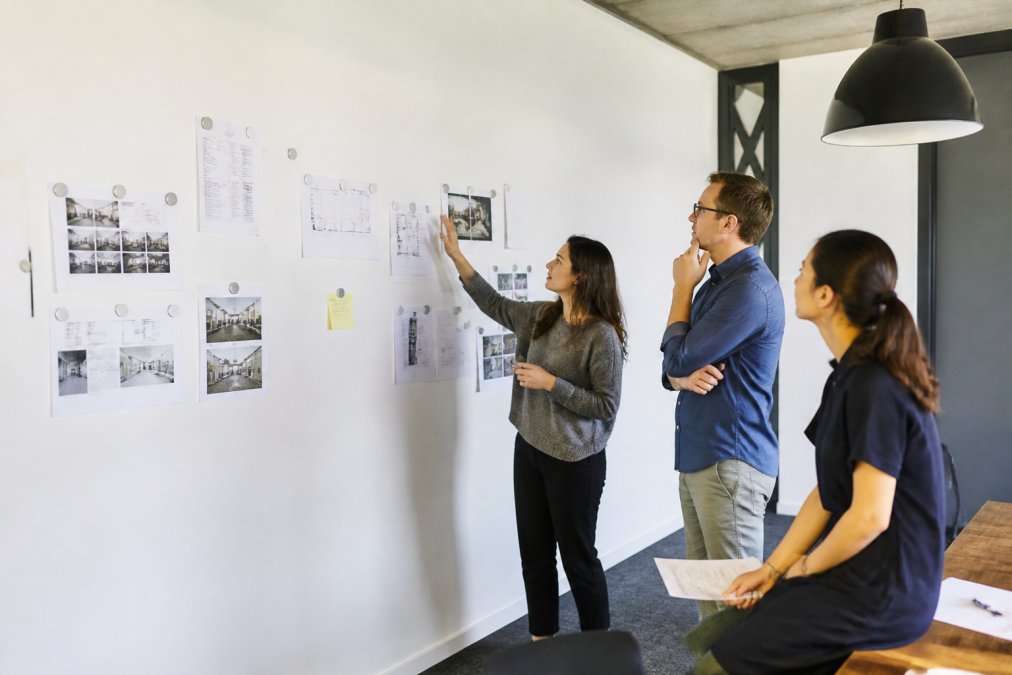
Magnetic wallcoverings represent the most comprehensive alternative to cork boards for professional office environments. Unlike cork, which offers a single function, magnetic wallcoverings create surfaces that hold magnets, accept dry-erase markers, display printed materials, and integrate invisibly into your office design, all on the same wall.
How Magnetic Walls Outperform Cork
The performance difference between magnetic wallcoverings and cork boards is fundamental. Cork relies on friction between pins and the material itself. Magnetic surfaces work with ferrous backing that holds magnets with industrial strength, equivalent to a high-quality fridge door. Documents, project cards, and displays stay exactly where you place them without shifting throughout the day.
Magnetic wallcoverings also accept dry-erase markers, transforming the wall into a writable surface simultaneously. Cork boards cannot do this. A team can write notes, sketch ideas, and pin supporting documents all on the same wall without switching between surfaces.
The durability gap is equally significant. Cork deteriorates over time, crumbles, and loses holding power as pins enlarge holes. A quality magnetic wallcovering like MagWrite™ Gloss White ferrous wallpaper maintains consistent performance for a decade or more. The surface doesn't degrade with use, and the magnetic backing doesn't weaken.
Installation and Durability Advantages
Professional-grade magnetic wallcoverings install using the paste-the-wall method: adhesive is applied to the prepared wall, and the wallcovering is positioned and smoothed into place, exactly like high-end wallpaper. A professional decorator completes the job in a single session.
Cork boards require mounting hardware, drilling, and fixing. They're permanent installations that create holes and damage when removed. Magnetic wallcoverings are equally permanent but leave no damage when eventually replaced.
Durability testing shows that quality magnetic wallcoverings withstand intensive daily use without degradation. The ferrous backing maintains its magnetic receptivity indefinitely. The writing surface resists ghosting and maintains clarity through hundreds of erase cycles. This longevity makes the initial cost investment recoverable over the product's lifespan, typically 10 years or longer.
Magnetic Dry-Erase Boards: Writing and Pinning Combined
Magnetic dry-erase wallcoverings combine two essential office functions in one surface. Teams can write with dry-erase markers and pin documents with magnets simultaneously, without any compromise in performance for either function.
Gloss vs Matt Finishes for Different Environments
A gloss white dry-erase surface is optimised for easy cleaning. Marker wipes off quickly with a standard eraser or microfibre cloth. The glossy finish also provides a subtle visual sheen that reads as premium in client-facing environments. However, gloss surfaces reflect light, which can create glare in rooms with windows or during presentations with projectors.

Matt white dry-erase surfaces eliminate glare entirely. The non-reflective finish maintains consistent visibility from every angle, regardless of lighting conditions. This makes matt finishes ideal for classrooms with bright windows, boardrooms with projectors, and any space where viewing angles vary.
MagWrite™ Matt White magnetic wallcovering is purpose-engineered for projection-compatible use. Teams can write on the surface, pin documents with magnets, and project directly onto it without needing a separate screen. This three-in-one functionality makes matt finishes exceptionally valuable in modern hybrid workspaces.
The choice between gloss and matt depends on your office's lighting and use case. Client-facing boardrooms often favour gloss. Classrooms, training rooms, and spaces with projectors favour matt. For most open-plan offices, matt is the safer default.
| Finish Type | Best For | Advantage | Consideration |
|---|---|---|---|
| Gloss White | Client presentations, premium environments | Easier to clean, premium appearance | Reflects light and glare |
| Matt White | Classrooms, projection rooms, varied lighting | Non-reflective, projector-compatible | Slightly slower to erase |
| Matt Black (Chalkboard) | Creative spaces, chalk preference | Elegant aesthetic, chalk contrast | Requires chalk pens, not dry-erase markers |
Interactive Wall Solutions for Classrooms and Training Spaces
Classrooms and training environments demand walls that actively participate in learning. Static cork boards cannot do this. Interactive wall solutions transform passive wall space into dynamic teaching tools that students and trainees engage with directly.
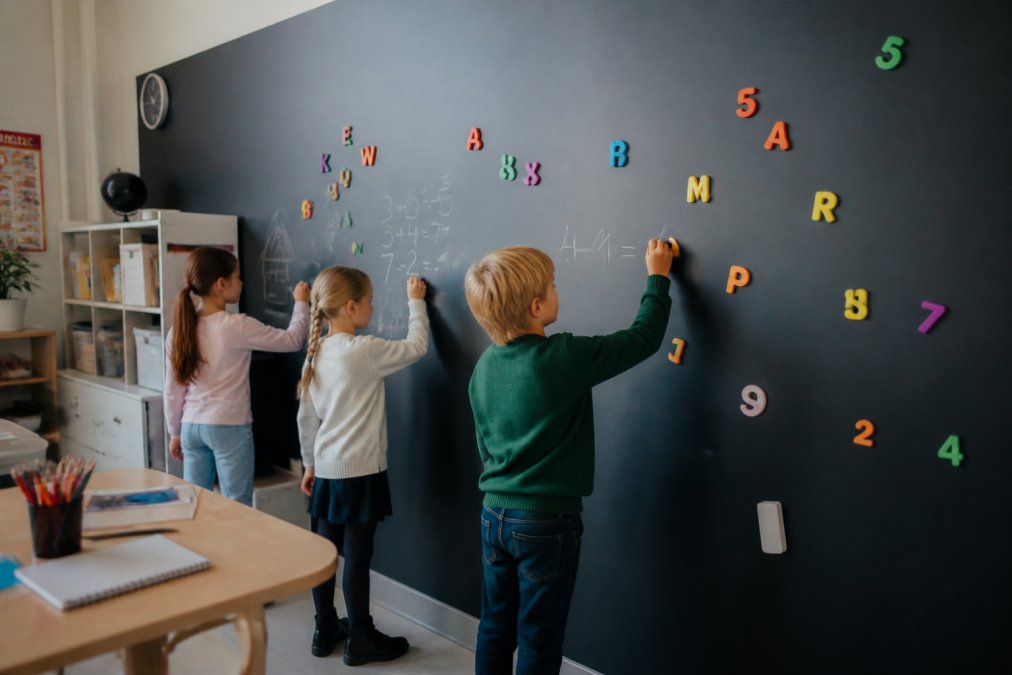
Interactive magnetic walls enable teachers to display learning content, invite student participation, and reorganise information in real time. A magnetic chalkboard wall allows teachers to write large, clear lesson content while students attach worksheets and diagrams directly to the surface using magnets. The wall becomes a collaborative learning space rather than a one-way display. 5 alternatives to traditional office furniture for SMEs.
Educational institutions have discovered that interactive walls improve engagement and retention (peer-reviewed research on engagement and retention). Students interact with physical materials on a large shared surface, supporting different learning styles simultaneously. Training centres and corporate universities use interactive magnetic walls for the same reason, facilitators can display frameworks, invite participants to contribute ideas, and reorganise content as discussions evolve.
MagChalk™ Matt Black magnetic chalkboard wallcovering is specifically designed for educational and training environments. The deep black surface provides stark contrast for white chalk, making content legible from the back of a large classroom. The magnetic receptivity rating holds all magnet types securely, supporting heavy learning materials without slipping.
Glass Writing Boards: Aesthetic and Acoustic Benefits
Glass writing boards are frameless, minimalist surfaces that function as dry-erase boards while delivering significant aesthetic and acoustic advantages over cork or traditional whiteboards.
The visual appeal of glass is undeniable. A frameless glass writing board reads as contemporary and premium, the kind of surface you'd expect in a design studio or high-end corporate office. Unlike cork boards (which look utilitarian) or traditional whiteboards (which read as institutional), glass surfaces integrate into designed interiors as intentional design elements.
Acoustically, glass provides unexpected benefits. Hard surfaces reflect sound, which can help define acoustic zones in open-plan offices and reduce sound bleed between areas. This is particularly valuable in hot-desking environments where noise management is a constant challenge.
The practical limitation of glass boards is that they don't hold magnets. If your team needs both writing and magnetic functionality, glass alone isn't sufficient. However, glass boards are often paired with magnetic surfaces elsewhere on the wall, creating a layered solution.
Fabric and Felt Bulletin Boards: Softer Alternatives
Fabric and felt bulletin boards offer a distinctly different aesthetic and functional approach compared to cork or magnetic surfaces. Rather than hard, reflective materials, fabric and felt provide soft, acoustically absorbent surfaces that feel warmer and more approachable.
Fabric-covered bulletin boards are particularly popular in healthcare settings, educational environments, and hospitality spaces where the visual warmth of the material contributes to the overall atmosphere. A felt board in a hospital corridor feels less institutional than cork or magnetic surfaces.
Acoustically, fabric and felt absorb sound rather than reflecting it. In open-plan offices or classrooms with hard surfaces and high ambient noise, a fabric bulletin board contributes to noise reduction.
The functional trade-off is that fabric and felt boards cannot hold magnets. They rely on pins, tacks, or adhesive-backed hooks to display materials. They also require more maintenance than hard surfaces, dust accumulates on the fabric, and the material can stain or show wear over time. For high-traffic environments with intensive daily use, fabric boards deteriorate faster than cork or magnetic alternatives.
Fabric and felt work best as accent surfaces in spaces that also include other display options.
Framed Pin Boards and Modular Display Systems
Framed pin boards, traditional cork or felt surfaces mounted in aluminium or wooden frames, represent an evolutionary step from loose cork sheets but remain limited compared to modern alternatives. The frame provides structure, durability, and a finished appearance that bare cork lacks. However, the functional limitations of pin-based systems remain unchanged.
Modular display systems offer greater flexibility. These are wall-mounted frameworks that accept interchangeable panels, cork, felt, whiteboard, or magnetic surfaces, allowing facilities to combine multiple functions in a single installation. A modular system might include a cork section for notices, a dry-erase section for planning, and a magnetic section for project displays, all within a unified frame.
The advantage of modularity is adaptability. As office needs change, individual panels can be replaced or reconfigured without replacing the entire installation. The disadvantage is cost and visual complexity. A modular system with multiple panel types is more expensive than a single unified surface, and the visible frame and panel boundaries can feel visually cluttered compared to seamless wallcovering solutions.
DIY and Budget-Friendly Cork Board Alternatives
For small teams, home offices, or budget-constrained environments, DIY alternatives to cork boards exist, though they come with significant functional limitations.
Chicken wire stretched across a wooden frame creates a textured surface that holds items pinned into the mesh. It's inexpensive and has a rustic aesthetic that works in certain contexts. However, it's fragile and doesn't hold magnets or accept writing.
Clipboards mounted to walls create a modular display system. Individual clipboards can be arranged in a grid, allowing teams to display multiple documents. This approach is affordable and flexible, but it's visually busy and doesn't create a cohesive surface.
Pegboards, perforated hardboard with removable hooks, allow flexible organisation of tools and materials. They're popular in workshops and studios but are unsuitable for professional office environments. They also don't hold magnets or accept writing.
DIY and budget alternatives solve specific problems in specific contexts, but they don't compete with professional cork board alternatives for office environments. They're suitable for personal workspaces or utility areas, but they lack the durability, functionality, and aesthetic integration that professional office spaces demand.
Comparison Table: Cork Board Alternatives at a Glance
| Alternative | Holds Magnets | Accepts Writing | Durability | Aesthetic Integration | Best For | | --- | --- | --- | --- | --- | | Magnetic Wallcoverings | Yes | Yes (if dry-erase) | 10+ years | Seamless, professional | Modern offices, classrooms, healthcare | | Glass Writing Boards | No | Yes | 7-10 years | Contemporary, premium | Design studios, boardrooms | | Fabric/Felt Boards | No | No | 3-5 years | Warm, approachable | Healthcare, hospitality, accent walls | | Framed Pin Boards | No | No | 5-7 years | Finished, structured | Reception areas, notices | | Modular Systems | Variable | Variable | 7-10 years | Flexible, visible frame | Dynamic workspaces requiring adaptation | | DIY Alternatives | Some | No | 2-4 years | Industrial, casual | Personal spaces, utility areas |
The shift from cork boards to modern alternatives reflects a fundamental change in how offices work. Static walls that only display information are no longer sufficient. Teams need surfaces that facilitate collaboration, support multiple functions simultaneously, and integrate into professionally designed spaces. Magnetic wallcoverings lead this shift because they deliver writing, magnetic holding, durability, and aesthetic sophistication in a single seamless installation.
For facilities managers and designers seeking to create collaborative, dynamic office environments, magnetic wallcoverings offer the most comprehensive alternative to traditional cork boards. They outperform cork on every functional dimension while delivering the aesthetic integration that modern workspaces demand.
Frequently Asked Questions
Q: What can you use instead of a cork board?
A: Modern cork board alternatives include magnetic wallcoverings, dry-erase boards, glass writing surfaces, fabric bulletin boards, and framed pin boards. Magnetic walls are the most versatile option, allowing you to write, pin documents with magnets, and display materials without pinholes. They're durable, professional-looking, and work across offices, classrooms, and healthcare settings. MagWrite magnetic wallcoverings score 4/5 for magnet receptivity, holding all magnet types securely.
Q: Are magnetic wallcoverings more durable than traditional cork boards?
A: Yes. Magnetic wallcoverings like MagWrite are engineered for commercial use with a hard-wearing laminate surface that resists wear, ghosting, and staining. Cork boards deteriorate over time, develop pinholes, and require regular replacement. Magnetic surfaces maintain their appearance through intensive daily use, and require only basic cleaning with a microfibre cloth. They're fire-resistant and safe for play areas, making them suitable for schools and healthcare environments.
Q: What are the best aesthetic alternatives to cork for office pinboards?
A: For professional aesthetics, magnetic dry-erase boards (MagWrite in gloss or matt white) offer seamless wall integration without visible frames or edges. Glass writing boards provide a premium, minimalist look. Fabric-covered bulletin boards add softness and sound absorption. Magnetic wallcoverings can be painted in any colour or covered with wallpaper, giving complete design freedom while maintaining full magnetic functionality. This makes them ideal for branded corporate environments where appearance matters as much as function.
Q: Can magnetic wallcoverings be used for large-scale office collaboration?
A: Absolutely. Magnetic wallcoverings are purpose-built for collaborative spaces. Unlike fixed cork boards, a magnetic wall provides unlimited writing and pinning space across an entire surface. Teams can run Kanban boards, project timelines, and brainstorming sessions directly on the wall using dry-erase markers and magnets. MagWrite wallcoverings cover any wall size, and mobile magnetic whiteboards like MagPivot (£1,195) can be moved between meeting rooms for flexible working arrangements.
Q: How do I know which cork board alternative is right for my office?
A: Consider your primary use: writing and pinning (magnetic dry-erase boards), professional aesthetics (painted magnetic walls), sound absorption (fabric boards), or budget constraints (DIY alternatives). Magnetic wallcoverings work best for high-use collaborative spaces, classrooms, and healthcare settings. For rental offices where drilling isn't allowed, mobile magnetic whiteboards offer full functionality without permanent installation. Most alternatives outperform cork on durability, maintenance, and professional appearance.
This article was written using GrandRanker