


Table of Contents
- What Are Interactive Learning Walls?
- Benefits of Interactive Learning Walls in the Classroom
- Sensory Wall Panels for Schools: Tactile and Multisensory Approaches
- Digital Learning Wall Ideas and Technology Integration
- DIY Interactive Learning Wall Activities on a Budget
- Designing Your Interactive Classroom Wall: A Step-by-Step Approach
- Durability, Maintenance and Long-Term Implementation
- Conclusion
Last Updated: August 15, 2026
What Are Interactive Learning Walls?
Interactive learning walls are dynamic classroom surfaces designed to engage students through tactile, visual, and collaborative experiences. Unlike traditional static bulletin boards, these walls actively participate in the learning process by allowing students to manipulate objects, write, draw, and interact with educational content throughout the day.
At MagScapes, we understand that classrooms need surfaces that evolve with teaching methods. Interactive learning walls transform ordinary wall space into functional learning tools that support hands-on exploration, group problem-solving, and multisensory engagement. These walls serve as focal points for active learning, enabling students to physically engage with curriculum content rather than passively receiving information.
The core concept combines several design elements: magnetic surfaces for secure attachment of materials, writable surfaces for annotation and brainstorming, and thoughtfully arranged tactile components that invite exploration. A well-designed interactive learning wall becomes an extension of the classroom itself, a teaching partner that encourages discovery and collaboration.

Benefits of Interactive Learning Walls in the Classroom
Interactive learning walls deliver measurable improvements in student engagement and collaborative learning outcomes. When students can physically interact with learning materials, they develop stronger connections to content and retain information more effectively than through passive observation alone.
The primary benefits include enhanced student engagement through hands-on manipulation of learning objects, improved fine motor skills as students arrange, attach, and manipulate materials on the wall, and stronger collaborative learning when multiple students work together around a shared interactive surface. Students naturally gather around these walls, creating impromptu learning conversations and peer-to-peer teaching moments that wouldn't occur with traditional static displays.
From a pedagogical perspective, interactive learning walls support differentiated instruction. Teachers can create multiple activity zones on the same wall, allowing students working at different levels to engage simultaneously. A student struggling with number concepts can work with tactile counting objects, whilst a more advanced peer explores algebraic relationships using the same wall space.

The spatial awareness benefits are particularly significant. As students physically arrange objects, move components, and navigate the wall space, they develop stronger understanding of spatial relationships and geometric thinking. This multisensory approach activates multiple learning pathways simultaneously, visual observation, tactile exploration, and kinesthetic movement all reinforce the same concepts.
Classroom management also improves when walls serve interactive functions. Students have purposeful activities that channel energy productively. Rather than managing behaviour during passive instruction, teachers facilitate active exploration and peer collaboration, fundamentally shifting the classroom dynamic toward student-centred learning.
Sensory Wall Panels for Schools: Tactile and Multisensory Approaches
Sensory wall panels are specialized surfaces designed to stimulate tactile exploration and multisensory engagement. These panels go beyond traditional writable surfaces by incorporating materials that invite touching, manipulating, and exploring, essential for younger learners and students with sensory processing needs.
Effective sensory wall panels combine varied textures, temperatures, and responsive materials. A well-designed sensory panel might include smooth magnetic surfaces alongside textured fabric sections, areas with different temperatures (cool metal versus warm wood), and components that respond to touch with movement or sound. This multisensory approach supports inclusive education by engaging students with different sensory preferences and learning styles.
For younger primary students, sensory exploration drives cognitive development. When a child manipulates magnetic shapes on a ferrous wall surface, they're simultaneously developing fine motor control, spatial reasoning, and understanding of how objects relate to one another. The tactile feedback creates stronger neural pathways than visual observation alone.
Common sensory panel elements include magnetic tiles and shapes that students arrange and rearrange, textured surfaces in different materials (fabric, rubber, wood grain finishes), interactive elements that move or respond to touch, and colour-coded zones that organize different types of sensory engagement. The key is intentional design, every element serves a learning purpose rather than existing for novelty alone.
Maintenance of sensory panels requires attention to durability. Materials must withstand frequent student contact, occasional rough handling, and regular cleaning. Magnetic surfaces like those offered by MagScapes hold up exceptionally well under classroom conditions, maintaining their receptiveness to magnetic objects even after years of daily use. The ferrous coating remains securely bonded to the wall surface, ensuring long-term functionality without degradation.
Digital Learning Wall Ideas and Technology Integration
Modern classrooms increasingly blend physical interactive surfaces with digital technology. Digital learning wall ideas combine projection mapping, motion sensors, and interactive displays with traditional tactile elements, creating hybrid environments that use the strengths of both approaches.
Projection mapping technology allows educators to transform wall surfaces into dynamic visual displays. A ferrous wall surface can simultaneously function as a magnetic workspace for physical objects whilst also serving as a projection surface for digital content. Students might manipulate magnetic shapes on the wall whilst projected imagery responds to their movements, creating an immersive environment where physical and digital learning merge seamlessly.
Motion sensors add another layer of interactivity. When students approach the wall or move objects across its surface, sensors can trigger audiovisual responses, images appear, sounds play, or content updates in real time. This creates immediate feedback loops that reinforce learning and maintain engagement through responsive technology.
Digital integration works best when technology enhances rather than replaces hands-on engagement. The most effective digital learning walls maintain strong tactile components alongside digital elements. Students still manipulate physical objects, still write and draw, still engage in collaborative problem-solving around a shared surface. The digital layer amplifies these activities rather than substituting for them.
Practical digital integration approaches include interactive whiteboard surfaces that combine dry-erase capability with digital projection, augmented reality components that overlay digital information onto physical objects students manipulate, and real-time collaborative software that captures student work on the wall and shares it across devices. Each approach maintains the core principle: active, hands-on learning enhanced by carefully chosen technology.
DIY Interactive Learning Wall Activities on a Budget
Creating engaging interactive learning walls doesn't require expensive commercial systems. Budget-friendly DIY approaches deliver substantial pedagogical benefits whilst remaining accessible to schools with limited funding.
The foundation of any budget-conscious interactive wall is a ferrous base surface. MagScapes' MagWrite™ product line transforms standard walls into magnetic surfaces at reasonable cost, eliminating the need for expensive magnetic paint that requires extensive preparation and often delivers inconsistent results. Once you have a ferrous surface, the possibilities expand dramatically because magnetic objects attach securely without additional fastening systems.
Low-cost interactive elements include cardboard shapes covered in magnetic tape, laminated paper cards with magnetic strips attached, repurposed plastic containers and lids arranged as manipulatives, fabric scraps providing varied textures, and student-created artwork mounted magnetically. These materials cost pennies per item yet create rich sensory and learning experiences.
Specific DIY activity ideas include number lines where students move magnetic counters to explore mathematical concepts, story sequencing walls where students arrange magnetic cards to retell narratives, vocabulary walls where students move word cards between categories, collaborative problem-solving spaces where small groups arrange magnetic pieces to solve puzzles, and sensory exploration zones where students manipulate different textured materials. Each activity costs minimal money but delivers significant learning value.
The key advantage of DIY approaches is flexibility and iteration. Teachers can experiment with different configurations, add elements based on student response, and modify activities seasonally without worrying about wasting expensive commercial products. A ferrous wall surface accommodates constant change, supporting the iterative, responsive teaching that characterizes excellent pedagogy.
Designing Your Interactive Classroom Wall: A Step-by-Step Approach
Creating an effective interactive learning wall requires intentional design rather than simply attaching objects to a surface. A systematic approach ensures the wall serves clear pedagogical purposes whilst remaining visually organized and functionally durable.
Step 1: Define Learning Objectives
Begin by identifying what specific learning outcomes the wall will support. Will it focus on numeracy, literacy, collaborative problem-solving, or sensory exploration? Clear objectives drive every subsequent design decision. A wall designed to support collaborative mathematics learning looks fundamentally different from one designed for sensory exploration in early years settings.
Step 2: Choose Your Base Surface
Select a ferrous wall surface that will serve as your foundation. MagScapes offers multiple options including the MagWrite™ Matt White and Gloss White surfaces, which provide clean, professional aesthetics whilst offering superior magnetic receptiveness compared to alternatives. The surface you choose affects both functionality and classroom aesthetics, so consider how the wall will look alongside your existing décor.
Step 3: Plan Your Layout
Sketch how you'll organize the wall into distinct zones or activity areas. Younger students benefit from clear separation between different types of activities, a numeracy zone, a literacy zone, a sensory exploration area. Older students can handle more complex layouts with overlapping or interconnected zones. Include adequate white space; a wall packed edge-to-edge overwhelms rather than engages.
Step 4: Gather Interactive Materials
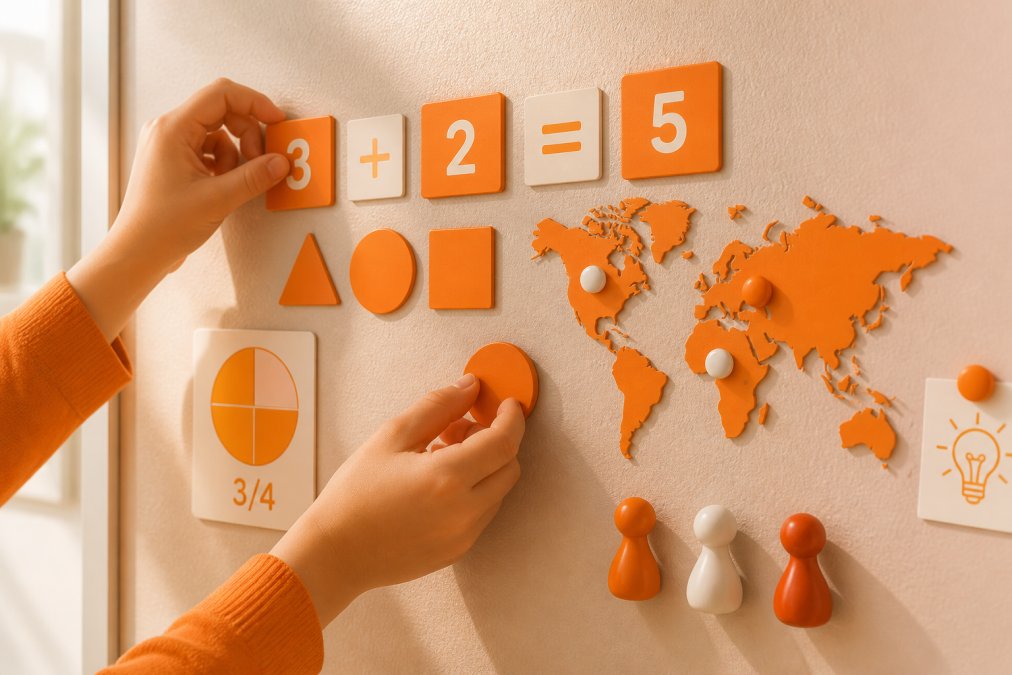
Collect or create the objects students will manipulate. These might include magnetic shapes, laminated cards, textured materials, or student-created work. Ensure everything is durable enough for frequent handling. Laminating paper-based materials significantly extends their lifespan in classroom conditions.
Step 5: Implement and Observe
Install your wall and observe how students interact with it during the first week. Do certain zones attract more engagement? Are there safety concerns? Does the layout support the collaborative interactions you intended? Gather this observational data before making refinements.
Step 6: Refine Based on Use
Modify the wall based on what you observe. Rotate content regularly, most educators find monthly changes maintain novelty and engagement. Add elements that students interact with frequently, remove components that receive little attention, and adjust zones based on how students actually use the space rather than how you imagined they would.
Durability, Maintenance and Long-Term Implementation
Interactive learning walls see substantial daily use in classroom environments. Durability directly affects long-term cost effectiveness and classroom functionality. A wall that deteriorates after one year requires expensive replacement; a wall that functions reliably for five years or more represents genuine value.
Ferrous wall surfaces from MagScapes maintain their magnetic properties indefinitely under normal classroom use. The ferrous coating doesn't degrade from repeated magnetic attachment and removal, unlike magnetic paint which can lose receptiveness over time or fail to hold objects securely after months of use. This durability difference translates to years of reliable functionality.
Maintenance requirements are minimal. Regular light cleaning with appropriate surface cleaners keeps ferrous walls looking fresh. For MagWrite™ surfaces with dry-erase capability, occasional cleaning with dry-erase cleaner maintains writing surface quality. Unlike painted surfaces or wallcoverings that can chip, peel, or stain, ferrous wallcoverings resist damage from normal classroom wear.
Magnetic objects themselves require minimal maintenance. Check laminated materials periodically for wear, replace magnetic tape on objects as needed, and remove any objects that show signs of damage. Most magnetic manipulatives outlast the curriculum they support, you'll likely update content long before components fail.
Long-term implementation strategy should include planning for content rotation. Rather than static walls that remain unchanged for years, design your interactive learning wall as an evolving space. Different units within your curriculum can use different wall configurations. Seasonal changes maintain visual interest. Student work rotates through the wall, creating ownership and engagement.
Budget for replacement materials rather than surface replacement. The ferrous wall surface itself should last for the life of the classroom, but the interactive elements, magnetic shapes, laminated cards, textured materials, will gradually need replacement as they wear. This tiered approach distributes costs over time rather than requiring large capital investments.
Conclusion
Interactive learning walls transform static classroom surfaces into active participants in the learning process. By combining thoughtful design, durable materials, and purposeful pedagogy, you create spaces where students engage deeply with content through hands-on exploration and collaborative problem-solving.
The investment in quality ferrous wall surfaces like MagScapes' MagWrite™ and MagChalk™ products pays dividends through years of reliable functionality and minimal maintenance. These surfaces support the dynamic, responsive teaching that characterizes excellent classrooms, spaces where walls evolve with curriculum needs and student interests rather than remaining fixed and unchanging. Start with clear learning objectives, choose durable materials, and refine based on how students actually use the space. Your interactive learning wall will become one of your most valuable teaching tools.

Frequently Asked Questions
What are the main benefits of interactive learning walls in schools?
Interactive learning walls transform static classroom surfaces into active learning participants. They boost student engagement by enabling hands-on collaboration, support fine motor skill development through tactile manipulation, and create immersive environments that enhance cognitive development. These walls accommodate diverse learning styles, visual, kinaesthetic, and auditory, making them invaluable for inclusive education. They also serve as focal points that organise classroom space and reduce distractions whilst promoting student-centred learning outcomes.
How can I create a DIY interactive learning wall on a budget?
Budget-friendly approaches include using ferrous magnetic wallcovering like MagWrite™ Gloss White (£216.00 per roll) paired with low-cost magnetic objects: cardboard cutouts laminated with magnetic tape, plastic shapes, number tiles, and letter cards. Layer learning activities by season or curriculum unit to maximise one installation. Involve students in creating magnetic manipulatives from recycled materials. Start with a single wall section rather than full-room coverage, then expand. This approach delivers multisensory engagement without expensive interactive technology.
What is the difference between digital and tactile learning walls?
Tactile learning walls use physical, touch-based elements, magnetic tiles, textured surfaces, and manipulatives, that develop fine motor skills and spatial awareness through direct manipulation. Digital learning walls incorporate projection mapping, motion sensors, and audiovisual systems for interactive experiences. Tactile walls suit younger learners and hands-on subjects; digital walls work well for older students and complex visual content. Many effective classrooms combine both: a ferrous magnetic wall for tactile learning plus a projection surface for digital content, creating a hybrid immersive environment.
Are interactive learning walls suitable for pupils with special educational needs?
Yes. Interactive walls support inclusive education by accommodating diverse learning needs. Tactile surfaces develop fine motor skills and provide sensory exploration opportunities. Adjustable wall-mounted displays at varying heights suit wheelchair users and different reach abilities. Colour-contrast options aid pupils with visual impairments. Quiet, low-stimulation designs support neurodivergent learners. Magnetic systems allow customisation, teachers can adjust complexity, remove overwhelming elements, or add calming textures. Consulting with SENCO staff ensures designs align with individual education plans and accessibility requirements.
How do interactive walls support the National Curriculum?
Interactive learning walls embed key curriculum areas: numeracy through manipulative counting and spatial reasoning activities; literacy via interactive letter and word displays; science through tactile exploration and visual demonstration; and art and design through collaborative creation. They enable active learning strategies required across Key Stages, foster collaborative workspace experiences, and improve pedagogical impact by moving instruction from passive reception to student-centred engagement. Walls can rotate content to match termly topics, making them adaptable across all subject areas and year groups.
What materials work best for classroom interactive displays?
Ferrous magnetic wallcovering provides the most durable, flexible foundation. MagWrite™ (available in gloss or matt finishes at £216-£248 per roll) allows dry-erase markers whilst holding magnets securely, combining whiteboard functionality with magnetic capability. MagChalk™ (£322.56 per roll) offers chalkboard aesthetics with magnetic strength. Pair these with non-toxic, lightweight magnetic objects: plastic shapes, wooden tiles, fabric pieces, and laminated paper cutouts. Avoid heavy metal objects that strain ferrous surfaces. Ensure all materials are washable, non-toxic, and safe for young learners.
How difficult is it to install magnetic wallcovering in a classroom?
Installation difficulty depends on wall condition and surface type. Smooth, clean walls accept ferrous wallcovering more easily than textured or painted surfaces. Most installations require surface preparation (cleaning, minor repairs) but not permanent structural changes, making them suitable for rental spaces. Facilities teams or contractors can install rolls, or smaller DIY sections work for schools with basic tools. Ferrous wallcovering adheres without magnetic interference to nearby equipment, testing in healthcare settings confirms no risk to medical devices or Wi-Fi routers. Professional installation ensures optimal adhesion and longevity.
This article was written using GrandRanker